Merino base layers by weight: 150, 190, and 230 gsm explained

Short answer
Weight, not brand, decides what a merino base layer is for. Fabric mass in gsm separates the jobs: 150 gsm for warm weather and high output, 190-200 gsm for three-season wear, 230-260 gsm for genuine winter, and 400-class expedition knits for static cold. The fiber is the same across tiers; only the amount of it changes. When comparing products, read the stated gsm, the knit construction (jersey or interlock), and the micron figure — the three lines that predict how a piece will feel before it is ever worn.
Why fabric weight decides the job
A base layer does two things at once: it traps a thin layer of warmed air against the skin, and it moves sweat away from the skin so the moisture can evaporate. Merino handles both by fiber behavior — the crimp in each fiber holds air, and the fiber itself absorbs moisture vapor and releases it outward. Fabric weight decides the balance between those jobs, because warmth scales with mass while drying speed falls with it. A 150 gsm knit holds less air but evaporates quickly; a 230 gsm knit holds noticeably more warmth and takes longer to shed moisture.
Merino brands publish weight in gsm, and the tiers line up across brands almost identically:
| Tier | Fabric weight | Best job | Weak job |
|---|---|---|---|
| Microweight | 120-150 gsm | Hot weather, high output, summer trails | Static cold; most people need a layer over it |
| Lightweight | 160-200 gsm | Three-season default; cool mornings, active days | Deep winter at rest |
| Midweight | 220-260 gsm | Genuine winter, mixed activity, snow sports | Overheating during hard climbs |
| Heavyweight | 350-420 gsm | Deep winter, low output, sleepwear in cold tents | Any sustained exertion |
The tiers are why “a merino base layer” is not one product. The same 18.5-micron fiber knit at 150 gsm and at 400 gsm produces garments that share softness and odor resistance but disagree completely about warmth. That is also why the fiber claim on a label (“100% merino”) tells a buyer less than the weight line does — the logic is the same one behind reading any fabric label in order, weight first, then construction.
The 150 tier: high output and hot weather
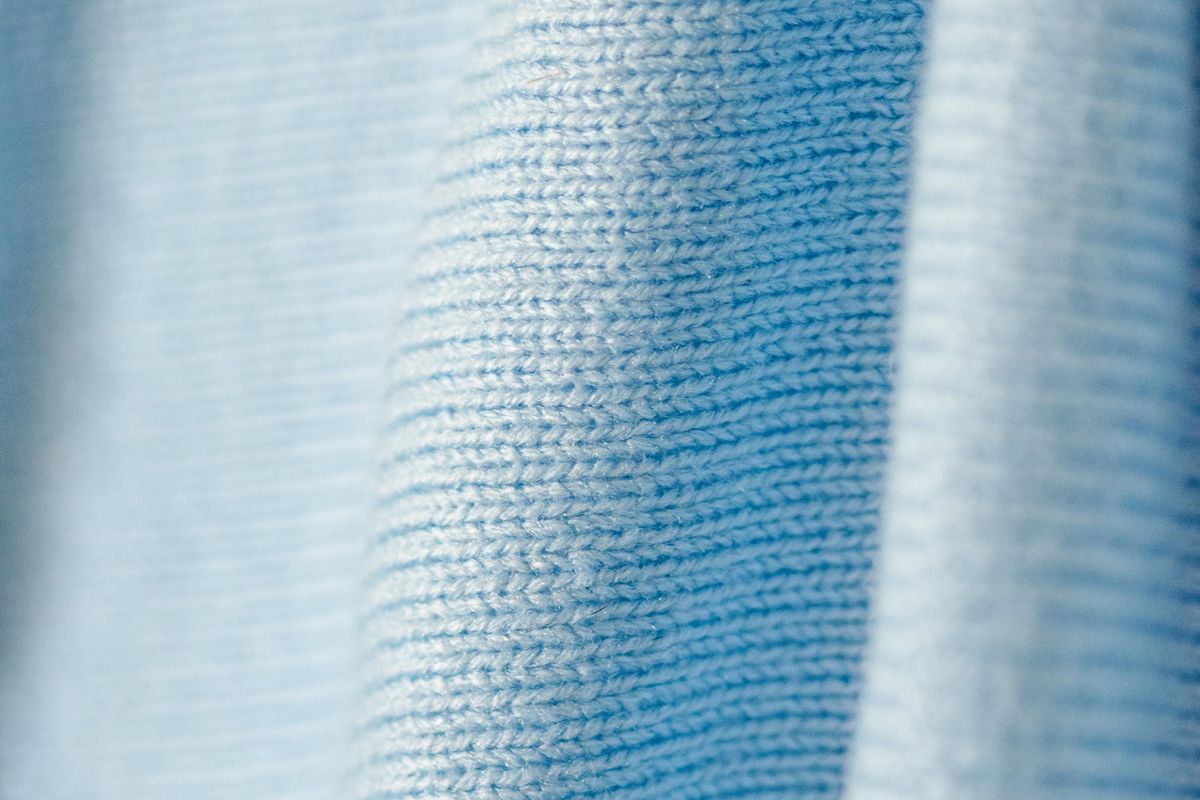
Microweight knits in the 120-150 gsm band are the summer and endurance options. The fabric is thin enough that it dries in minutes, which matters because the garment’s job at high output is to keep sweat moving rather than to keep warmth in. Runners, fast hikers, and anyone who runs hot do best here. The same tier doubles as a modest warm-weather shirt that happens to resist odor for days, which is the trait that keeps it in travel bags.
The trade-off is sharp. A 150 gsm crew at rest in cold air offers little: the knit is too open to hold a still layer of warmed air, so most wearers treat it as the first layer in a two-layer system rather than a standalone piece. It also wears faster at equal handling, simply because there is less yarn per square meter to absorb abrasion. Ultralight knits are the merino tier most likely to develop holes at pack-strap contact points.
The 190-200 tier: the three-season default
The lightweight band is where merino base layers sell best, and for good reason. A 190 gsm jersey knit is thick enough for cool mornings and thin enough that sustained movement does not overheat it. It covers spring, autumn, and mild winter days on its own, and becomes the under-layer in a proper winter system without adding bulk. For a buyer choosing a single piece, this is the tier that carries the most days of the year.
Construction at this weight is almost always single jersey — the flat, smooth knit used in t-shirts, which stretches easily and dries fastest. Jersey’s looseness is the reason lightweight merino feels closest to a cotton tee on the skin. It is also the reason the fabric needs care in the wash; heat and agitation can shrink an open knit quickly, so washing habits matter from the first wear.
The 230-260 tier: winter workhorse
Midweight knits change construction as well as mass. Most brands knit their 220-260 gsm fabrics in interlock — a double-knit structure with two sets of loops locked together, which makes the fabric thicker, more stable, and slower to stretch out. Interlock also puts a smooth face on both sides of the garment, so no loop floats sit against the skin. The warmth gain is not only from the extra grams; the denser structure holds air better.
| Knit | Structure | Feel | Weight where it dominates |
|---|---|---|---|
| Jersey (single knit) | One set of loops; open, smooth face | Lightest, stretchiest, fastest drying | 120-200 gsm |
| Interlock (double knit) | Two locked loop sets; stable, two smooth faces | Denser, warmer, holds shape longer | 220 gsm and up |
Midweight is the tier for genuine winter: lift queues, cold commutes, snow days, and any situation where the wearer moves sometimes and stands still often. It is heavier under a shell and slower to dry than the lightweight tier, which is the honest cost of the warmth. People who run cold often find this tier works year-round, while people who run hot use it only in the coldest months.
Three midweight-and-up crews, compared on published specs
Because weight and fiber specs are exactly what product pages disclose unevenly, three widely sold crews make a clean comparison — one classic 250 gsm midweight, one 260-class winter layer with the fullest fiber disclosure, and one 400 gsm expedition knit for deep cold:
Smartwool Men’s Classic Thermal Merino Base Layer Crew
Icebreaker Men’s Merino 260 Tech Long Sleeve Crewe Thermal Top
Minus33 Expedition Merino Wool Base Layer Crew
The Smartwool crew is the category’s reference point: 100% ZQ-certified merino knit at 250 gsm in interlock, with flatlock seams and offset shoulder construction, listed on the brand’s United States site at USD 125. Its spec sheet states the fabric weight clearly but leaves the micron count unstated. The Icebreaker top is the disclosure standout — the product page states 100% merino at 18.9 micron, names the garment’s place in the brand’s 260 warmth tier, lists a full product weight of 310 grams in size medium, and prices at USD 125 on the North American site. The Minus33 Expedition crew is the heavyweight entry: the brand’s own fabric guide documents its Expedition fabric at 400 gsm, 18.5 micron, interlock knit, and retailer listings carry the long-sleeve crew at USD 149.99. At 400 gsm it behaves like a light sweater rather than a shirt — the tier for standing still in serious cold, not for sustained climbs.
| Specification | Smartwool Men’s Classic Thermal Merino Base Layer Crew | Icebreaker Men’s Merino 260 Tech Long Sleeve Crewe Thermal Top | Minus33 Expedition Merino Wool Base Layer Crew |
|---|---|---|---|
| Fiber content | 100% merino (ZQ-certified) | 100% merino | 100% merino |
| Stated fabric weight | 250 gsm | 260 tier (fabric gsm not stated) | 400 gsm |
| Stated micron | Not stated | 18.9 micron | 18.5 micron |
| Knit construction | Interlock | Jersey | Interlock |
| Stated garment weight | Not stated | 310 g (size medium) | Not stated |
| Natural role | All-purpose cold-weather midweight | Cold-weather layering, snow sports | Deep-winter static warmth |
| Listed price | USD 125 | USD 125 | USD 149.99 |
Read as a set, the three show how the tier system maps onto real product sheets. The 250 and 260 pieces are close cousins — same job, similar price — while the 400 gsm garment sits two tiers up, and the numbers on the page say so before the garment is ever touched. The fiber fineness line matters here too: 18.5-18.9 micron is squarely in the comfortable-against-skin band, the range where fine wool knits stay soft through hours of contact with bare skin.
Fit: snug is functional, not stylistic
Base layers only manage moisture where they touch skin. A knit that hangs loose leaves air gaps that fill with humid air and cool it slowly, which is why every serious base layer is cut slim. The fabric should lie flat against the torso, follow the shoulder without pulling at the seams, and reach far enough at the cuff and hem that no bare skin shows when reaching or bending. Seams matter as much as fit at this layer because the garment presses against skin under backpack straps and harnesses: flatlock seams sit flush, while raised seams become pressure points over hours.
Two construction details are worth checking on any product page. Offset or forward-set shoulder seams keep the seam line away from the top of the shoulder where pack straps cross. Gusseted underarms add range of motion without pulling the hem up, which matters more in the heavier tiers where the fabric stretches less. Neither feature is marketing; both change how the garment behaves on a long day.
Washing, drying, and the first hundred wears
Merino’s odor resistance is the quiet economic argument for the whole category — a base layer worn several days between washes outlasts a synthetic worn the same way — but the wash itself is where these knits die. Heat plus agitation felts the fiber scales together and shrinks the garment a size, and the damage does not reverse. Cold water, wool detergent, and flat drying are the whole protocol; the full method, including recovery options, is in the guide to washing merino without shrinkage.
Storage between seasons matters less for base layers than for heavy sweaters — thin knits survive folding without harm — but moths treat a fine 150 gsm knit as a feast, so off-season wool storage hygiene applies at every weight. Anyone weighing the tier system against the rest of a cold-weather wardrobe will find the same mass-versus-air logic scaled up in the merino micron and fiber fineness guide, which explains why the same 18.5-micron fiber can feel soft at 250 gsm and thinner-bodied at 150 gsm.
The picks
Some links below are affiliate links — we may earn a commission at no extra cost to you.
Smartwool Men's Classic Thermal Merino Base Layer Crew
The reference 250 gsm interlock midweight — 100% ZQ merino, clear spec disclosure, and the most versatile winter weight for mixed activity.
Icebreaker Men's Merino 260 Tech Long Sleeve Crewe Thermal Top
The most complete spec sheet at the same price: stated 18.9 micron, 260 warmth tier, full 310 g garment weight, and 100% merino throughout.
Minus33 Expedition Merino Wool Base Layer Crew
A 400 gsm, 18.5 micron interlock heavyweight for deep-winter static warmth — effectively a light sweater for people who run cold or stand still in serious cold.
Comparison
| Specification | Smartwool Men's Classic Thermal Merino Base Layer Crew | Icebreaker Men's Merino 260 Tech Long Sleeve Crewe Thermal Top | Minus33 Expedition Merino Wool Base Layer Crew |
|---|---|---|---|
| Fiber content | 100% merino (ZQ-certified) | 100% merino | 100% merino |
| Stated fabric weight | 250 gsm | 260 warmth tier (fabric gsm not stated) | 400 gsm |
| Stated micron | Not stated | 18.9 micron | 18.5 micron |
| Knit construction | Interlock | Jersey | Interlock |
| Stated garment weight | Not stated | 310 g (size medium) | Not stated |
| Listed price | USD 125 | USD 125 | USD 149.99 |
| Natural role | All-purpose cold-weather midweight | Cold-weather layering, snow sports | Deep-winter static warmth |
Three merino crews compared on published specifications
Sources
- Smartwool product page for the Men's Classic Thermal Merino Base Layer Crew (fabric weight, fiber content, construction, price)
- Icebreaker product page for the Men's Merino 260 Tech Long Sleeve Crewe Thermal Top (micron, garment weight, warmth tier, price)
- Minus33 published merino fabric weight guide and retailer listings for the Expedition long-sleeve crew (fabric weight, micron, knit, price)
Frequently asked questions
- Is 150 or 230 gsm merino better for winter?
- For genuine winter wear, 230 gsm is the practical starting point and 250-260 gsm is the common choice. A 150 gsm knit moves sweat fast but traps too little air to keep most people warm below roughly 10 degrees Celsius at low activity. The heavier knit insulates more at rest; the lighter one manages sweat better during exertion.
- What does 190 gsm mean on a merino base layer?
- It is the fabric weight: 190 grams per square meter of knit. Weight in gsm is the single most useful spec for predicting warmth and drying speed. A 190 gsm knit sits in the lightweight band — thick enough for cool shoulder seasons, thin enough to keep moving in without overheating.
- Do heavier merino base layers breathe worse?
- The fiber breathes the same at every weight; the extra mass slows heat loss rather than blocking moisture. In practice a 230 gsm knit feels warmer at rest and dries slower than a 150 gsm one, because there is more fabric to hold and evaporate water. High-output athletes often prefer lightweights for exactly that reason.