How to read a fabric label: fiber, weight, and weave terms decoded
Read a fabric label in three passes: fiber percentages first, then weight (gsm or oz), then weave and care terms. Fiber content is the only line with legal force; weight is voluntary but the single most useful number for predicting feel; weave terms like jersey, twill, and poplin explain the rest. The label is the closest thing clothing has to a nutrition panel — the more lines it fills in, the fewer surprises later, and the fewer lines, the more the silences matter.
What the fiber line is legally promising
Fiber content is the one part of a label with real legal teeth. In the United States, the Textile Fiber Products Identification Act requires every textile product to list fiber percentages by weight, in descending order, plus the manufacturer’s identity — usually in the form of an RN number. Similar rules apply in the EU and most other major markets. That means “60% cotton, 40% polyester” is a checked claim, not a vibe: a fabric that overstated its cotton share would be mislabeled goods.
But the fiber line promises less than people assume. “100% cotton” guarantees the fiber and nothing else — not the cotton’s staple length, not the yarn twist, not the knit density. The gap between a three-dollar open-end cotton tee and a long-staple pima one is entirely invisible on this line, which is why the other lines matter. If you want the full reasoning on how fiber length separates good cotton from cheap cotton, that belongs to a different fiber discussion; the label itself will never volunteer it.
GSM and oz: finding the weight line
Weight is the number most labels omit and most product pages should state. Two units do the same job: gsm (grams per square meter) and oz (ounces per square yard). Converting is one multiplication — 1 oz/yd² equals about 33.9 gsm — so a “5 oz” shirt fabric lands near 170 gsm, and a “10 oz” jacket denim sits near 340 gsm. If you want the full conversion map across fabric types, the gsm to oz relationship is the same everywhere; only the sensible ranges differ.
Typical zones worth memorizing:
| Fabric weight | GSM | oz/yd² | What it usually is |
|---|---|---|---|
| Very light | 100-140 | 3-4 | Linings, scarves, summer voiles |
| Light | 140-180 | 4-5.3 | Shirts, tees, chambray |
| Midweight | 180-250 | 5.3-7.4 | Heavy tees, sweatshirting, flannel |
| Heavy | 250-400 | 7.4-11.8 | Jeans, canvas, outerwear cloth |
| Very heavy | 400+ | 12+ | Workwear canvas, coating |
The weight line predicts a surprising amount: how opaque a shirt is, how fast a tee dries, how a garment drapes versus stands. For one worked example, the difference between a 160 gsm and a 220 gsm t-shirt is the difference between a summer layer and a four-season one — the fabric barely changes, only the mass.
Weave and construction terms
The weave terms on labels and spec sheets compress a lot into one word, and each word changes how the fabric behaves:
| Term | Family | What it tells you |
|---|---|---|
| Jersey | Knit | Single knit; stretches, curls at cut edges; nearly all t-shirts |
| Interlock | Knit | Double knit; thicker, more stable, two-way stretch |
| Rib | Knit | Vertical ridges; cuffs, collars, high sideways stretch |
| Poplin | Woven | Plain weave, fine yarn; smooth dress-shirt surface |
| Twill | Woven | Diagonal ridges; drapes, resists wrinkles, fades characteristically |
| Oxford | Woven | Plain weave with heavier filler yarns; textured, durable |
| Flannel | Woven | Twill base, napped surface; warm and soft |
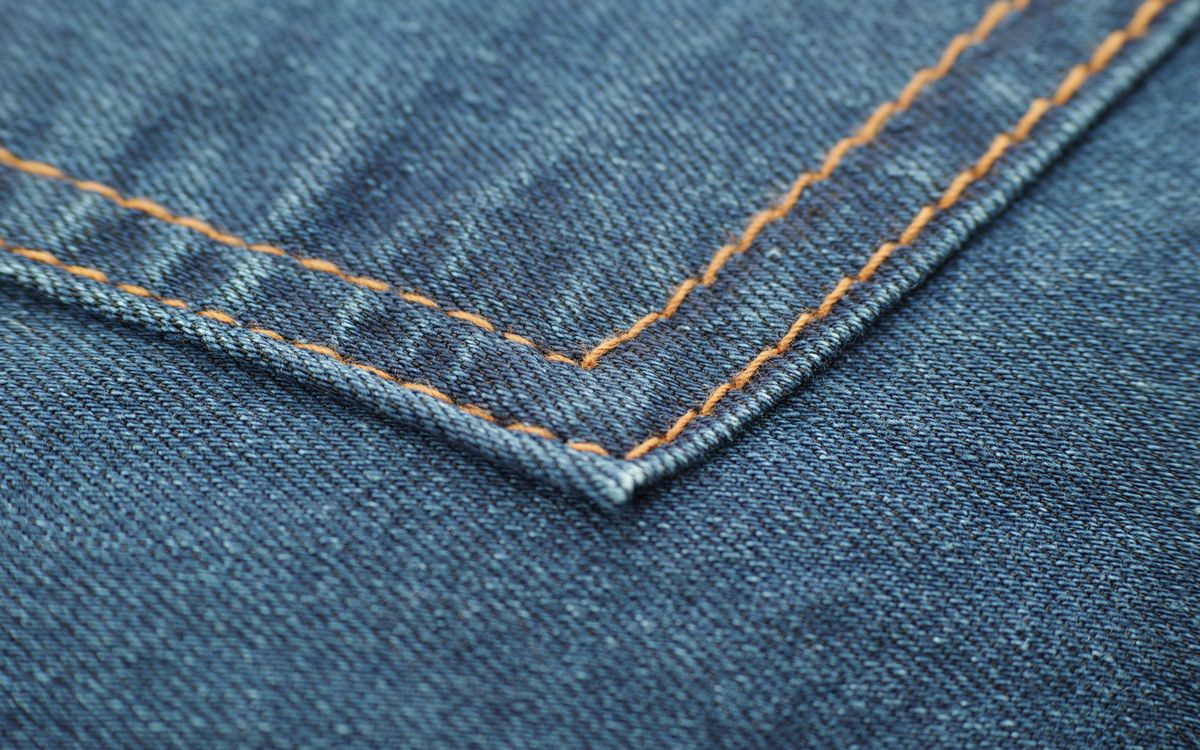
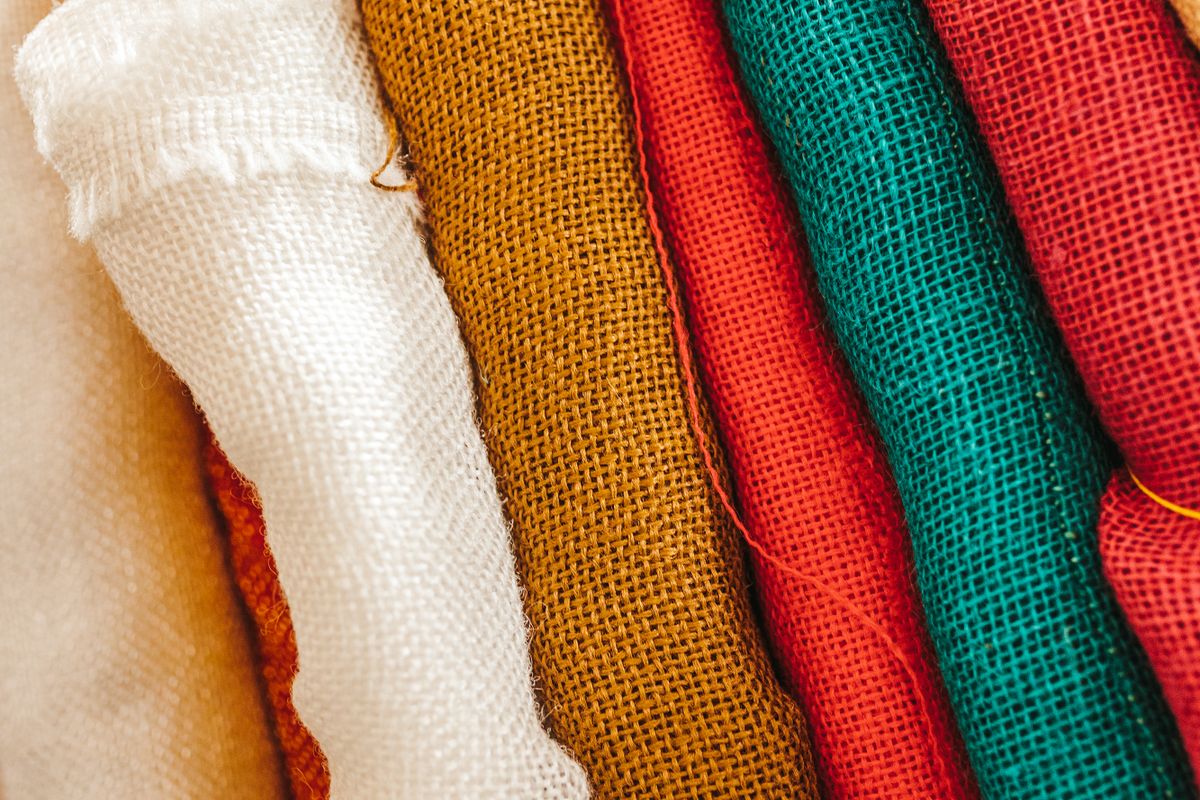
The knit-versus-woven divide is the biggest fork: knits stretch because yarn loops, wovens hold shape because yarns interlace at right angles. A garment labeled “stretch” with a woven weave almost certainly carries elastane; a knit needs none to stretch. Chambray and denim are the classic pair for seeing how weave alone splits one cotton yarn into two different fabrics — same fiber, different interlacing, completely different garment.
Blend percentages: why the split matters
Blends are not half-promises; the ratio decides which fiber’s personality dominates. A 60/40 cotton-polyester garment behaves more like polyester than like cotton — it dries fast, resists wrinkles, and wicks less. Flip the ratio and the cotton traits lead. The same logic runs through wool blends, where even 20% of a synthetic can change pilling behavior, and through stretch fabrics, where 2-5% elastane is enough to change recovery.
Two blend patterns deserve special attention:
- Synthetic-majority blends on warm-weather clothing. Polyester above roughly 60% tends to hold odor and feel clammy in heat, regardless of the “breathable” label copy nearby.
- Small wool or silk percentages in “premium” blends. A “silk-touch” garment that is 95% viscose and 5% silk is marketing arithmetic, not a silk garment.
The descending-order rule makes this easy: the first listed fiber is the majority fiber, and the garment will mostly behave like it.
The care row: instructions versus suggestions
Care instructions are the second legally protected part of the label. In the United States, the FTC’s Care Labeling Rule requires permanent care instructions on most textile garments — words or the international symbol set. These are not decorative. A “machine wash cold” instruction reflects what the maker judged safe for that fiber and dye, and ignoring it is the most common way a fine garment becomes a shrunken one.
Three terms carry real information:
- “Hand wash” usually signals a fabric whose knit or weave cannot survive machine agitation — fine merino, loosely woven linen, silk.
- “Dry clean only” on everyday cotton or polyester is often about structure (interlinings, pleats) rather than the fabric itself.
- “Tumble dry low” exists because heat plus friction is what felts wool and relaxes elastane — a synthetic that survives 60°C washing can still lose its stretch at dryer temperature.
Wool deserves its own protocol, and the care row for a merino piece often reads more cautious than the fiber strictly requires — which is why the practical method for washing merino without shrinkage matters more than the tag’s terse warning.
Marketing words that mean nothing
Some label vocabulary is real; some is not. Terms with established textile meaning: combed, ring-spun, mercerized, supima, melange, peached. Terms with no standardized meaning: “premium,” “luxury,” “boutique,” “curated,” and most “feel” adjectives. The word “supima,” for instance, is a licensed trademark covering extra-long-staple pima cotton, and a garment either pays the license or does not use the word. The word “premium” is available to anyone.
A quick contrast:
| Trust the term | Skepticism warranted |
|---|---|
| “100% cotton” (legally enforced) | “Cotton-feel” |
| “Supima” (trademarked) | “Premium cotton” |
| “Machine wash” (regulated) | “Easy-care finish” |
| “245 gsm” (measurable) | “Heavyweight feel” |
The pattern is consistent: verifiable claims are specific and checkable, marketing claims are adjectives. When a listing pairs one real number with five adjectives, the number is doing all the work.
A worked label, line by line
Take a plausible mid-tier product-page spec line — “100% organic cotton, 210 gsm jersey, garment washed, machine wash cold.” Read in order: the fiber line says cotton and nothing but cotton (the organic claim is a separate agricultural certification, not a fabric property); 210 gsm places it at the top of the tee weight range, a four-season shirt rather than a summer one; “jersey” confirms a knit that will stretch and soften rather than a woven that holds structure; “garment washed” means shrinkage was largely taken out at the factory, so the size chart is more trustworthy; “machine wash cold” reflects the dye rather than the fiber.
Compare that against a sparse label — “65% polyester, 35% cotton.” Nothing here is false, and nothing here is wrong. But the missing lines (weight, weave, finish) are exactly the ones that would have told you the garment dries fast, holds color, and drapes stiffly. Labels do not lie; they just volunteer unequal amounts. Reading them well means knowing which silences matter, and checking the two or three lines that actually change how the thing wears before it ever reaches the wash.
Frequently asked questions
- Is gsm on a fabric label the same as fabric weight in oz?
- They measure the same thing in different units. GSM is grams per square meter; ounces are per square yard. One ounce per square yard equals roughly 33.9 gsm, so a 5 oz fabric weighs about 170 gsm. Most European and Asian garments print gsm, most American workwear prints oz.
- What does 100% cotton on a label actually guarantee?
- Under the United States Textile Fiber Products Identification Act, it guarantees the fiber content only — that the fabric contains no other fiber. It says nothing about fiber quality, staple length, yarn count, or fabric weight, which is why two 100% cotton shirts can feel completely different.
- Where should the fabric weight appear on a label?
- Nowhere is it required. Care instructions and fiber content are legally mandatory in most markets, but weight is voluntary disclosure. If a listing or sewn-in label states a gsm or oz figure, treat it as a useful bonus — its absence is normal, not a red flag.