Oxford vs Poplin vs Broadcloth: the weave differences that decide the shirt
Oxford, poplin, and broadcloth are all plain-weave cotton shirtings, and most product pages blur them into one phrase. The differences live in how the yarns are paired, how tightly they are set, and how heavy the resulting cloth runs — and those three variables predict nearly everything a wearer notices: texture, drape, wrinkle behavior, and the formality ceiling of the shirt. This guide separates the three weaves structurally, then checks three currently sold shirts against their published specifications.
Short answer
Oxford is a basket-variant plain weave with paired yarns: heavier, textured, more forgiving, at home in casual and smart-casual shirts. Poplin is a fine, tightly set plain weave with a faint rib: smooth, crisp, lighter, and the standard for dress shirts. Broadcloth, in American labeling, is essentially poplin’s flatter sibling — when a shirt says broadcloth, expect poplin-like behavior. Weave structure, not brand language, decides the hand.
Oxford: a basket weave with two yarns doing the work of one
Oxford is the only one of the three that is not a simple plain weave. In a standard plain weave, each weft thread passes over and under single warp threads in strict alternation. Oxford modifies this into a basket variation: warp yarns are grouped in pairs, and the weft passes over and under each pair, so two warp threads and two weft threads move as units. The resulting cloth has a distinct granular, pebbled surface — the texture people mean when they call a fabric “oxford” without naming a fiber at all.
That pairing has two mechanical consequences. First, oxford carries heavier yarns than the other two weaves, usually in the 60s to 80s count range against poplin’s finer 80s-to-100s-plus, which is why the cloth feels substantial at a similar fabric weight. Second, the basket structure holds small pockets of air between the yarn units, giving oxford a soft, slightly open hand that reads as comfortable rather than crisp. The cloth also takes color in a characteristic way: the classic oxford shirt uses a colored warp yarn against a white weft, and the basket structure lets the two show separately, producing the muted, chalky tone no solid-dyed poplin quite matches.
The paired-yarn structure also explains the oxford shirt’s famous collar roll. A coarser, airier cloth holds a curved shape instead of folding flat, which is why button-down collars built on oxford roll from points to band without stiff interlining doing all the work. A fine poplin collar, by contrast, either carries heavy interlining or collapses flat.
Poplin: fine yarns, tight setting, a quiet rib
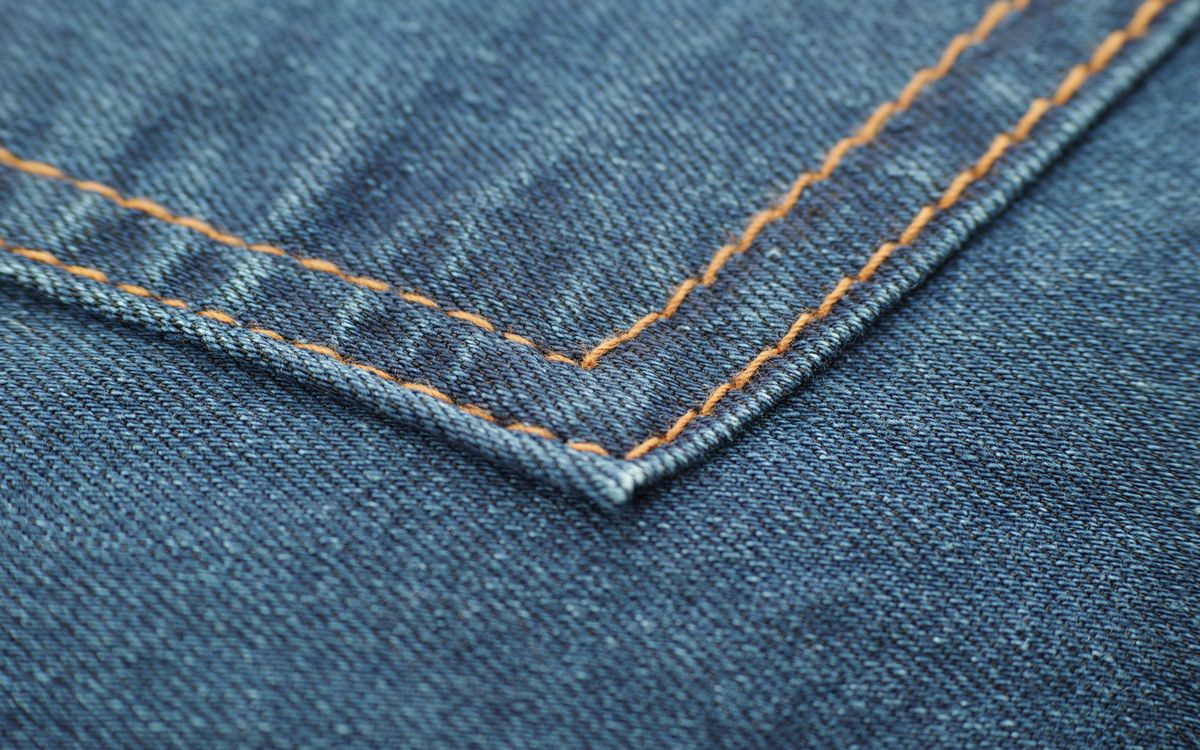
Poplin is a plain weave pushed to its limits: fine warp yarns, a filling yarn traditionally slightly heavier than the warp, and a very high number of threads per inch. The historical cloth paired a silk warp with a worsted weft, and that heavier filling line is what gives poplin its faint transverse rib — visible on close inspection, felt as a whisper of texture under a fingertip. Modern cotton poplin usually weaves fine combed cotton in both directions at a high sett, so the rib is subtler and the surface reads as smooth, flat, and slightly lustrous.
The tight setting is the whole point. High yarn count means many fine yarns packed close together, and that produces the three qualities that make poplin the formal shirt default: a crisp hand, a clean surface that shows a pressed edge sharply, and a light weight — most cotton poplin shirting runs roughly 110 to 150 gsm. The trade-off is transparency risk and wrinkle visibility. A tightly woven fine cloth can go slightly sheer in light colors, and its smooth face displays every crease. That wrinkle behavior is why a large share of poplin dress shirts on the market carry a non-iron resin finish, a chemical treatment that locks the weave’s shape — a real functional difference, but also a finishing choice worth reading for on the label, not assuming.
Broadcloth: the name, and what it means where you shop
Broadcloth is the confusing one, because the word means different things by market. In the United States, cotton broadcloth is a fine, tightly woven plain weave essentially identical to poplin, usually woven a shade flatter and smoother — many American manufacturers treat “broadcloth” and “poplin” as interchangeable names for the same cloth. In British usage, broadcloth historically referred to a wide, good-quality woolen cloth, which is why a UK-made “broadcloth” shirt may describe something subtly different from an American one.
For a buyer, the practical rule is simple: on American shirting labels, treat broadcloth as poplin. Expect the fine yarns, the smooth surface, the light weight, and the crisp-with-wrinkles behavior. When a label gives a yarn count or fabric weight, that information tells you more than the weave name does — the guide to reading a fabric label covers which spec lines actually carry information and which are decoration. Where a manufacturer gives neither, the safest structural test is surface texture: broadcloth and poplin feel smooth with a faint rib; oxford feels unmistakably granular.
The three weaves on one spec sheet
| Property | Oxford | Poplin | Broadcloth (US labels) |
|---|---|---|---|
| Weave structure | Basket variant of plain weave, yarns in pairs | Plain weave, high thread count | Plain weave, high thread count |
| Yarn size | Coarser, often 60s-80s count | Fine, combed, 80s and up | Fine, combed |
| Surface | Granular, pebbled | Smooth with faint weft rib | Smooth, slightly flatter than poplin |
| Typical shirt weight | Roughly 150-200 gsm | Roughly 110-150 gsm | Roughly 110-140 gsm |
| Hand | Soft, airy, substantial | Crisp, flat, light | Crisp, flat, light |
| Wrinkle behavior | Softer creases, texture hides them | Sharp creases, fully visible | Sharp creases, fully visible |
| Transparency risk | Low | Moderate in light colors | Moderate in light colors |
| Formality range | Casual to smart-casual | Formal to business-casual | Formal to business-casual |
The weight figures deserve one caveat: they are ranges for cotton shirting in general circulation, not guarantees. Finishing, singeing, and fiber staple all shift the final number, which is why a garment label with a stated gsm beats any generic table.
Weight and hand: how each weave wears
Because oxford carries paired yarns, it hits its casual sweet spot at a weight that would make poplin feel heavy. A 170 gsm oxford drapes like a sturdy year-round shirt; the same weight poplin barely exists in dress shirting because at that weight the weave turns boardy. Running the logic the other direction, a 120 gsm poplin is the classic summer dress shirt — cool because it is light and because the tight weave passes air through fine, uniform gaps — while 120 gsm oxford is nearly unmade, since the basket structure needs yarn body to hold its texture.
This is also where the two families answer different briefs. Oxford’s air pockets and matte surface make it the travel-friendly, no-iron-necessary casual weave: creases form but read soft. Poplin’s flat face is what makes it formal: it reflects light evenly, holds a knife-edge crease, and pairs with a tie without visual noise. Neither is better; they solve different problems, and the fabric weight map shows how each sits in the broader weight landscape across garment types.
Collar behavior: the weave shows up at the neck
Collar construction is where weave choice becomes visible from two meters away. The classic oxford button-down collar rolls because its cloth has enough body and surface friction to hold a curved shape — the roll is the cloth working with the interlining, not interlining alone. Put a fine poplin under the same button-down pattern and the collar tends to fold flat along the roll line unless the interlining is cut heavier, which is why many poplin button-downs look flatter at the points than their oxford equivalents.
Spread and cutaway collars, the formal shapes, almost always come in poplin or broadcloth because those weaves support tall, stiff interlined collars that stand without collapsing. The dress-shirt weave guide walks through how poplin, twill, and royal oxford divide the formal collar territory — royal oxford being a larger-scale basket weave that sits at the textured end of the formal spectrum, distinct from the casual oxford covered here despite sharing the name.
Three shirts, checked on their published specs
Because weave names on product pages are loose, it is useful to look at what three currently sold shirts actually declare. One oxford, one broadcloth, one poplin — each at a different price tier, each transparent enough on construction to compare:
Brooks Brothers American-Made Oxford Cloth Button-Down Dress Shirt
Uniqlo Unisex Extra Fine Cotton Broadcloth Shirt
Charles Tyrwhitt Non-Iron Stretch Poplin Shirt
The Brooks Brothers shirt is the construction showcase: 100% cotton oxford made in the United States, with mother-of-pearl buttons, single-needle tailored side seams, a chest pocket, and a center back pleat — details that cost little to list and much to build, and the most complete seam-and-trim disclosure of the three. The Uniqlo broadcloth is the budget case for reading specs carefully: its page states 100% extra-fine cotton with ultra-long fibers, a special pre-wash for softness, two different collar interlinings (soft at the placket, firm at the cuffs), and flat-fell seams at the armholes — a specification list that explains why the shirt wears above its tier. The Charles Tyrwhitt poplin carries the finishing-driven spec: 100% cotton woven to a close criss-cross pattern that produces natural stretch, a non-iron treatment, a split yoke, a mitred single cuff, and supplied brass collar stiffeners — the full formal package, with the caveat that non-iron is a resin finish, a deliberate trade of some natural hand for pressed-all-day behavior.
| Specification | Brooks Brothers American-Made Oxford Cloth Button-Down Dress Shirt | Uniqlo Unisex Extra Fine Cotton Broadcloth Shirt | Charles Tyrwhitt Non-Iron Stretch Poplin Shirt |
|---|---|---|---|
| Weave family | Oxford | Broadcloth (poplin-like) | Poplin |
| Fiber content | 100% cotton | 100% extra-fine cotton, ultra-long staple | 100% cotton, natural stretch |
| Surface character | Granular, matte | Smooth, pre-washed hand | Smooth, crisp, non-iron |
| Construction details | Mother-of-pearl buttons, single-needle side seams, chest pocket, back pleat | Two collar interlinings, flat-fell seams at armholes | Split yoke, mitred single cuff, brass collar stays |
| Collar | Polo button-down, soft roll | Not specified on US listing | Cutaway, stiffened |
| Care | Machine washable | Machine washable | Machine washable, non-iron finish |
| Best role | Year-round casual, texture-first | Everyday smart dressing | Formal, pressed-look dressing |
Choosing between them
The decision compresses to two questions. First, formal or lived-in: if the shirt meets a tie, poplin or broadcloth is the structural answer, and the non-iron question becomes a finishing preference rather than a fabric one. If the shirt wears untucked or under knitwear, oxford’s texture and soft creases do the work that “quality casual” is supposed to do. Second, what does the label actually disclose: a stated yarn count, fiber staple, or fabric weight outranks the weave name itself. Between the two smooth weaves there is no functional daylight in the American market, and spending on oxford-versus-poplin as a category distinction is effort better spent on yarn quality and construction details — the difference the certified-material guide traces through third-party marks like GOTS and OEKO-TEX, which measure what the fibers went through rather than what the weave is called.
The picks
Some links below are affiliate links — we may earn a commission at no extra cost to you.
Brooks Brothers American-Made Oxford Cloth Button-Down Dress Shirt
100% cotton oxford with the fullest construction disclosure of the three — mother-of-pearl buttons, single-needle tailored side seams, chest pocket, and center back pleat — in the weave whose paired yarns reward that seam work.
Uniqlo Unisex Extra Fine Cotton Broadcloth Shirt
A budget broadcloth whose published specs do the quality work: ultra-long-staple extra-fine cotton, a pre-wash for softness, two collar interlinings, and flat-fell seams at the armholes.
Charles Tyrwhitt Non-Iron Stretch Poplin Shirt
A fine 100% cotton poplin with a non-iron finish, split yoke, mitred single cuff, and brass collar stiffeners — the complete formal construction at the crisp end of the weave spectrum.
Comparison
| Specification | Brooks Brothers American-Made Oxford Cloth Button-Down Dress Shirt | Uniqlo Unisex Extra Fine Cotton Broadcloth Shirt | Charles Tyrwhitt Non-Iron Stretch Poplin Shirt |
|---|---|---|---|
| Weave family | Oxford (basket-variant plain weave) | Broadcloth (poplin-like plain weave) | Poplin (high-count plain weave) |
| Fiber content | 100% cotton | 100% extra-fine cotton, ultra-long staple | 100% cotton, natural stretch |
| Surface character | Granular, matte | Smooth, pre-washed hand | Smooth, crisp, non-iron |
| Construction details | Mother-of-pearl buttons, single-needle side seams, chest pocket, back pleat | Two collar interlinings, flat-fell seams at armholes | Split yoke, mitred single cuff, brass collar stays |
| Collar | Polo button-down, soft roll | Not specified on US listing | Cutaway, stiffened |
| Care | Machine washable | Machine washable | Machine washable, non-iron finish |
Specifications as published on the makers' product pages, checked November 2026.
Sources
- Brooks Brothers product page for the American-Made Oxford Cloth Button-Down Dress Shirt (brooksbrothers.com, item ME04455), for the 100% cotton oxford, mother-of-pearl buttons, single-needle side seams, chest pocket, and center back pleat, checked November 2026
- Uniqlo US product page for the Unisex Extra Fine Cotton Broadcloth Shirt (uniqlo.com, product ID 441725), for the extra-fine ultra-long-staple cotton, pre-wash process, two collar interlinings, and flat-fell seams, checked November 2026
- Charles Tyrwhitt product page for the Non-Iron Stretch Poplin Shirt (charlestyrwhitt.com, product code FOP0046MBU), for the close criss-cross cotton weave, non-iron finish, split yoke, mitred single cuff, and brass collar stiffeners, checked November 2026
Frequently asked questions
- Is oxford heavier than poplin?
- Yes, typically. Oxford uses paired yarns in a basket variation of the plain weave, so the same yarn count produces a thicker, more open cloth. Most cotton oxford shirts land somewhere around 150 to 200 gsm, while poplin usually runs lighter, roughly 110 to 150 gsm, which is why poplin is the summer-dress-shirt weave and oxford the year-round casual one.
- Are broadcloth and poplin the same fabric?
- Functionally, in the American market, they are close enough that the names are used interchangeably. Both describe a fine, tightly set plain weave with a smooth surface. Poplin traditionally carries a slight weft rib from a heavier filling yarn, and broadcloth in the United States usually means a poplin-like cloth woven a shade flatter. In the UK, broadcloth can refer to something closer to a wide-width plain weave, so the label matters less than the yarn count.
- Which wrinkles less, oxford or poplin?
- Oxford wrinkles less visibly because its coarser, paired yarns hold a softer crease and its textured surface hides what does form. Poplin's smooth, high-count surface shows every crease sharply, which is exactly why many poplin dress shirts carry a non-iron resin finish. Untreated poplin is the crisper and the more wrinkling-prone of the two.