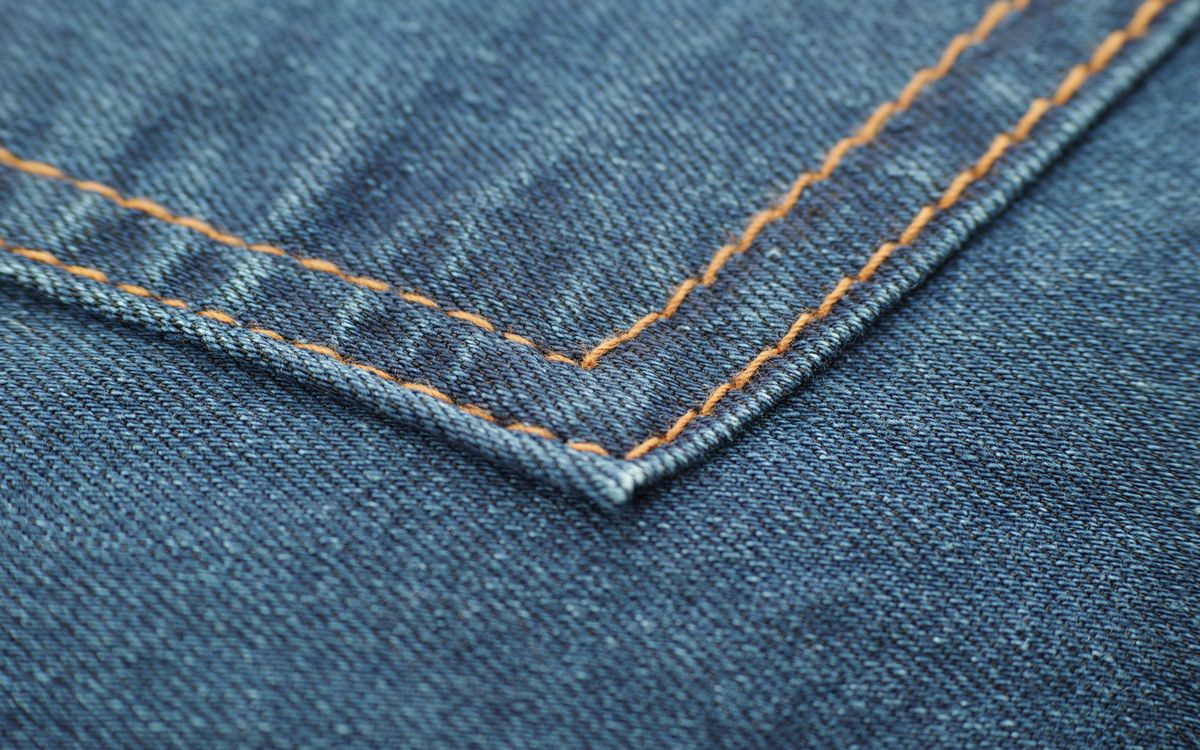
The GSM Weight Map: what 150-400 gsm fabrics are each good for
Fabric weight is the one number most likely to be printed on a product page and least likely to be understood. GSM — grams per square meter — compresses a fabric’s entire seasonal identity into one figure, but the figure only means something once it is placed against a fiber and a garment type. This guide maps the 100 to 400 gsm range across the garments it actually covers, explains why the same number feels different in different fibers, and shows how to use weight as a filter rather than a verdict.
Short answer
GSM is mass per area, and its meaning depends entirely on context: 160 gsm is a sturdy summer t-shirt in cotton jersey, a heavy dress shirt in poplin, and a midweight lining in canvas terms. Read weight within one fiber family and one garment category — inside those bounds, higher gsm reliably means more opacity, more structure, and more warmth. Outside them, the number is close to meaningless.
What gsm measures, and what it quietly ignores
The measurement itself is honest: cut a square meter, weigh it. Everything the number does not tell you is where the confusion starts. GSM says nothing about thickness — a lofty brushed fleece and a dense oxford can occupy the same band, because air weighs nothing and yarn packing matters more than bulk. It says nothing about warmth, for the same reason: insulation is trapped air, not mass. And it says nothing about quality, because weight is a material quantity, while quality lives in fiber length, yarn twist, and how tightly the fabric is constructed.
What gsm does predict, within a fiber family, is real: opacity rises with weight, drape gets firmer, abrasion tolerance generally improves, and the fabric’s seasonal role shifts from summer toward winter. That is the correct mental model — weight as one axis, fiber and weave as the other two — and every confident reading of a product page depends on keeping all three axes in play. The guide to reading a fabric label covers how much of this a typical product page actually discloses; the short version is that a stated gsm is the single most valuable spec line a garment page can carry.
The map: 100 to 400 gsm, band by band
| GSM band | Cotton wovens | Jersey knits | Where it belongs in a wardrobe |
|---|---|---|---|
| 100-140 | Summer shirting, poplin, voile | Ultra-light tees, base layers | Hot weather; layering; opacity is the limiting factor |
| 140-180 | Everyday shirting, broadcloth | Classic tees, light sweatshirt fabric | Three-season core; the t-shirt sweet spot |
| 180-240 | Light flannel, heavier shirting | Heavyweight tees, mid sweatshirts | Cool weather; structure takes over from drape |
| 240-320 | Mid flannel, light canvas | Heavy fleece, sweatshirt fleece | Winter casual; holds shape, resists wind |
| 320-400 | Canvas, denim (12 oz class) | Dense loopback, coating cloth | Outer layers; workwear weight; minimal drape |
The bands are cotton-centric because cotton is where gsm labeling is most consistent, and they describe typical commercial practice rather than guarantees — finishing and fiber staple shift real garments by tens of grams in either direction. Two families need their own mental adjustments. Denim and canvas are traditionally sold in ounces per square yard rather than gsm, so their band positions look confusing until converted. And wool shifts every band downward: a 300 gsm merino knit wears like a midlayer, while a 300 gsm woven wool trouser cloth is a heavy winter garment — wool fiber itself is less dense than cotton, so equal gsm yields more loft and more air.
Why the same gsm feels different across fibers
Fiber density and yarn structure decide how much cloth a gram of fiber builds. Wool fiber is both less dense and more crimped than cotton, so a wool fabric at the same gsm holds more trapped air and reads loftier and warmer — the reason a 280 gsm merino base layer is a serious cold-weather garment while a 280 gsm cotton jersey is a winter hoodie that feels damp when it sweats. Linen runs the opposite way: flax fiber is denser and the yarns are inelastic, so linen at a given gsm feels crisper, thinner in hand, and more open — a 180 gsm linen shirt is a high-summer garment, while 180 gsm cotton shirting is a year-round weight.
Synthetics add a third behavior. Polyester weighs less per volume than cotton, so synthetic fabrics hit their opacity and structure at lower gsm, and they hold almost no water — a soaked 200 gsm synthetic layer weighs far less and dries far faster than a soaked 200 gsm cotton one. This is why weight comparisons across fiber types mislead more than any other misuse of the number: the fiber-weight-by-climate guide keeps the fibers separated by design, and the comparison only becomes meaningful once fiber is held constant.
Ounces and gsm: converting the two systems
American workwear and denim are sold in ounces per square yard; everything else in gsm. The conversion factor is 33.9 — one ounce per square yard equals about 33.9 gsm — and the common apparel weights land as follows:
| Ounces (per sq yd) | Approx. gsm | Typical goods |
|---|---|---|
| 3 oz | 100 gsm | Shirting, linings |
| 5 oz | 170 gsm | Light tees, poplin dress shirts |
| 7 oz | 240 gsm | Heavyweight tees, light flannel |
| 9 oz | 305 gsm | Chino cloth, light canvas |
| 12 oz | 405 gsm | Midweight denim, canvas jackets |
| 16 oz | 540 gsm | Heavy selvedge denim, work canvas |
One caution travels with the table: some mills quote ounces per linear yard at a stated fabric width, not per square yard, which deflates the apparent number. When a denim listing says “12 oz” without qualifiers, it almost always means per square yard, but for anything narrower than 60 inches the assumption deserves a check — the selvedge denim guide works through how those weights map onto seasonal wear.
Using gsm when you shop online
Weight earns its place on a product page because it answers questions nothing else on the page answers. The reliable method is comparative, not absolute: find a garment you own whose weight and wear you know, check what its category labels as gsm, and use the new listing’s number as a delta. A 200 gsm tee against a 160 gsm one you already own will be predictably denser, more opaque, slower to dry, and more structured; the number tells you the direction and the rough size of the difference before the parcel arrives.
Weight also exposes the listings that omit it. A product page that states gsm, fiber, and weave is speaking the language of the spec check that should precede any order; a page that offers only adjectives is asking you to buy the photo. Where gsm is missing, category comparisons still work — sweatshirt and fleece constructions have published norms, as do denim and canvas — but each guess widens the error bar. The guide to reading fabric information from online listings shows where on a page each spec hides, because different retailers put weight in the title, the materials table, or the last line of the description.
The limits of the number
Three failure modes cap how far gsm analysis can go. Stretch knits confuse it: spandex adds weight without adding warmth or opacity, so a 220 gsm cotton-elastane jersey can wear lighter than a 200 gsm pure cotton one. Brushed constructions confuse it: brushing moves surface fiber into air, so a 260 gsm brushed fleece insulates like a heavier flat weave. And blends confuse it most: a poly-cotton at one gsm splits the behaviors of both fibers and belongs to neither band cleanly.
None of this makes the number useless — it makes the number one input among three. Weight within a fiber family and a garment category is a strong signal; weight across families is noise. A buyer who holds fiber and construction constant, and treats gsm as the dial that tunes season and structure within that frame, extracts nearly everything the figure can honestly provide. The seasonal wardrobe guide builds on exactly that frame, allocating weights across a year instead of within a category.
Frequently asked questions
- What does GSM actually measure?
- Grams per square meter: the mass of one square meter of fabric. It is a density measure, not a thickness or a warmth measure — a dense fine-yarn weave and a lofty brushed knit can share a number while wearing completely differently. It is best read within one fiber and one fabric family, where it reliably tracks opacity, structure, and seasonal role.
- Is higher GSM always better quality?
- No. Higher weight means more material per area, which often correlates with opacity and durability, but quality lives in fiber length, yarn twist, and construction density. A 240 gsm short-staple cotton tee wears out faster than a 160 gsm long-staple one. Weight answers what season a fabric belongs to; it cannot answer how long it will last.
- How do I convert ounces to GSM?
- For most apparel fabrics, multiply ounces per square yard by 33.9 to get gsm. So a 5 oz canvas is about 170 gsm, and a 12 oz denim is about 400 gsm. The conversion is approximate because mills weigh some fabrics per linear yard at a given width rather than per square yard, so treat published figures as bands rather than exact values.