Linen shirt weight and seasons: how many grams for which month
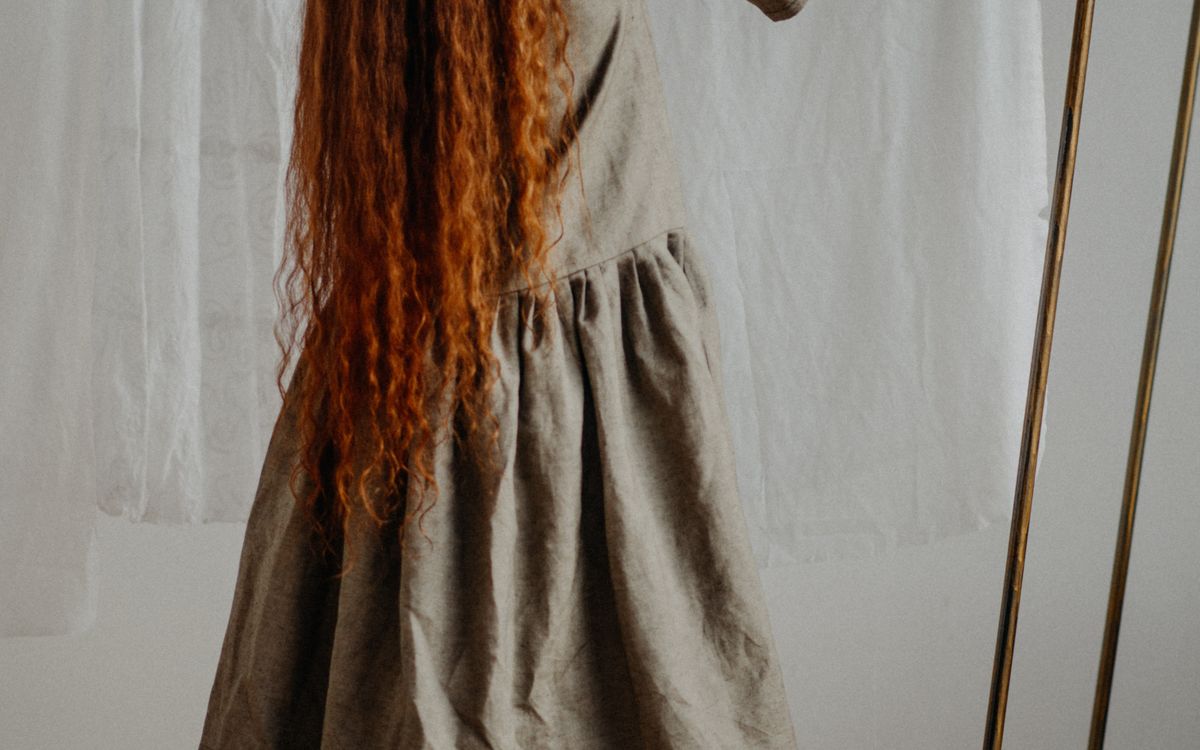
Linen’s reputation as “the summer fabric” undersells how wide its weight range actually runs. The same fiber is spun into sheer 120 gsm shirting that breathes like an open weave and into dense 250 gsm cloth that blocks wind, and the weight on the label decides which months a shirt belongs to. This guide maps the linen weight bands, explains what each feels like across a season, and covers what blends do to the calculation.
Short answer
Linen shirting spans roughly 120 to 250 gsm, and the band decides the season: 120-150 gsm is high-summer cloth, airy and quick-drying; 150-200 gsm is the standard band that carries a shirt through warm months and mild mid-season; 200 gsm and up is heavy linen that works in cool weather and holds a jacket-like structure. Heavier linen wrinkles less visibly and drapes with more weight, so weight also changes the look, not just the temperature.
What linen’s structure does with weight
Linen yarn comes from flax bast fibers, which are thicker and more rigid than cotton fibers, and the weave usually leaves visible slubs and a slightly open, irregular grid. Because the fiber is hollow at a cellular level and the yarn is relatively loose, air moves through linen readily — the fabric’s famous breathability is structural, not a coating or a finish. Moisture behavior reinforces it: linen absorbs water quickly, wicks it to the open surface, and dries fast, which is why a linen shirt handles sweat cycles that leave cotton clammy.
Weight modifies both properties in the same direction. Light linen has more open interstices per gram, so airflow and drying speed peak at the bottom of the range; heavy linen packs yarns tighter, closes air channels, and starts blocking wind — which turns the same fiber into a mid-season fabric. The result is that linen weight behaves more like a dial than a ladder: every extra gram trades breathability for structure and wind resistance. This is the same weight-to-airflow logic that runs through the broader gsm-to-season mapping, with linen occupying the airy end of the woven-fabric spectrum.
| Weight band | Character | Where it fits |
|---|---|---|
| 120-150 gsm | Sheer to light; maximum airflow, fastest drying, most visible wrinkles | High summer, hot climates, resort wear |
| 150-200 gsm | The standard band; opaque, still airy, structured enough for a collar | Warm months through mild mid-season |
| 200-250 gsm | Heavy; dense, wind-resistant, deep drape, fewer sharp creases | Cool evenings, mid-season, jacket-adjacent styles |
The light band: what 120-150 gsm actually wears like
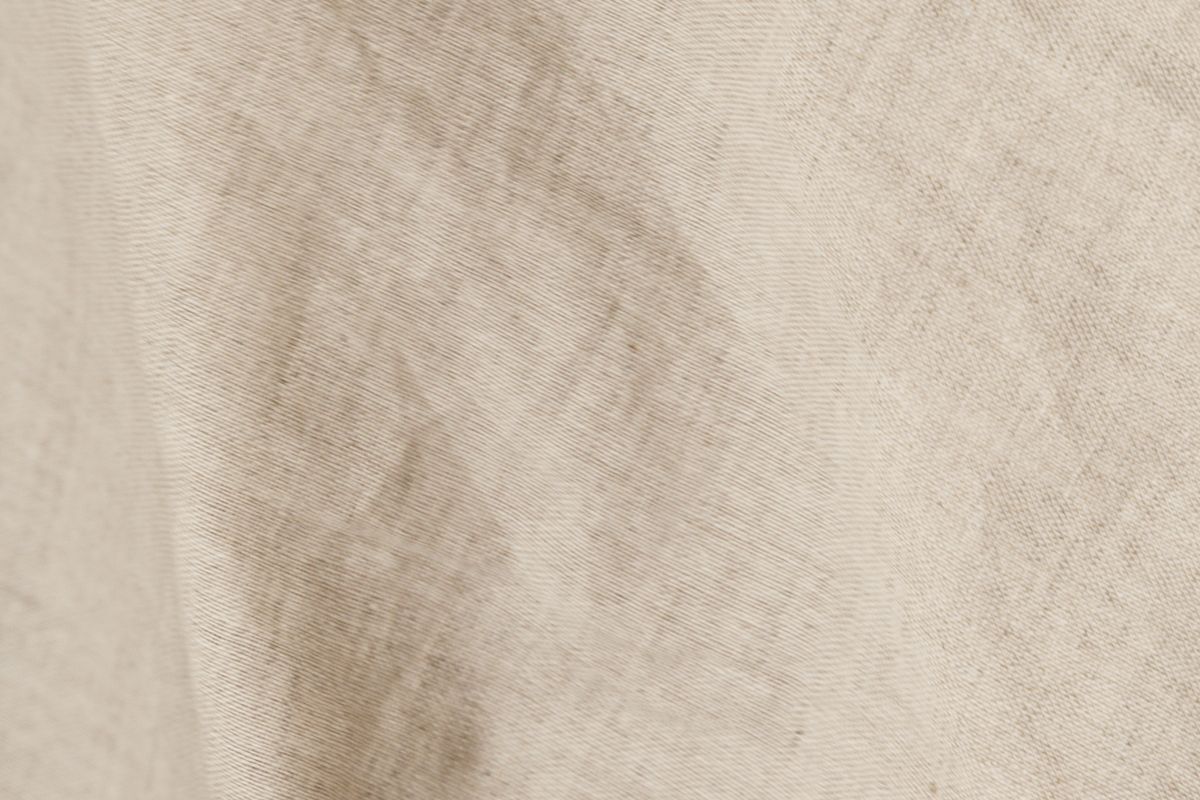
At the bottom of the range, linen shirting is a cloth for genuine heat. The fabric is translucent enough that pale colors show what is behind them, drapes almost like a soft curtain against the body, and dries from a rain shower or a swim in a matter of an hour or two in a breeze. Wrinkling peaks here: the light cloth creases at every bend, and the creases are part of the garment’s read — a light linen shirt pressed flat looks less like itself than one worn naturally for an hour.
This band is also the most fragile-feeling. Light linen yarns are thin, seams and hems show wear sooner, and the fabric snags on rough surfaces more readily. None of this is a defect — the cloth is engineered for airflow first — but it explains why the band clusters in casual styles rather than tailored ones: a sheer, fast-creasing fabric undermines a formal silhouette no matter how it is cut.
The standard band: 150-200 gsm and the honest middle
Most linen shirts on the market sit between 150 and 200 gsm, and for good reason. At these weights the cloth is opaque, holds a collar with light interfacing, and keeps enough of the open weave to stay genuinely cool. The hand is firmer than the light band — the shirt stands slightly away from the body and softens over its first dozen washes into the relaxed, lived-in state people associate with old linen.
The standard band is also where linen’s season range is widest, because two variables move together. Weight adds wind resistance, so a 180 gsm shirt worn in October with a knit beneath behaves like a proper mid-season layer, while the same shirt in August on its own remains cool enough for heat. This two-sided behavior — one garment serving warm and mild months — is the practical case for the standard band over the sheer one, unless the buyer lives somewhere summer never ends.
| Season | Best band | Why |
|---|---|---|
| High summer | 120-150 gsm | Maximum airflow and drying speed; wrinkles read as casual, not sloppy |
| Late spring, early autumn | 150-200 gsm | Opaque and structured, still breathable; layers under knits without bulk |
| Cool mid-season | 200 gsm + | Dense enough to block wind; the fiber’s moisture handling still applies |
Heavy linen: the fiber’s other personality
Above roughly 200 gsm, linen stops reading as “summer fabric” entirely. Spinnaker-style and upholstery-weight linens are dense enough to stand on their own: the cloth blocks wind, drapes with visible mass, and holds sharp geometric shapes — which is why heavy linen shows up in structured overshirts, chore coats, and unlined jackets rather than in shirting proper. The creasing behavior changes too: heavy linen wrinkles less sharply and recovers faster, because the thicker yarns resist the hard folds that light cloth sets instantly.
Heavy linen keeps the fiber’s moisture virtues, which is part of why it works in damp cool weather where cotton canvas feels clammy. It absorbs vapor, spreads it across the surface, and dries faster than a dense cotton of the same weight. For wardrobes in mild-winter climates, a heavy linen overshirt is a legitimate rain-season layer, a use the fiber’s summer reputation completely obscures.
What blends trade away
Blended linen appears throughout the market, and the blend percentage tells you which properties survive. Cotton-linen, the most common mix, softens the crisp hand, reduces sharp creasing, and adds a bit of weight — a 55/45 cotton-linen shirt wears smoother and wrinkles less, at the cost of some airflow and drying speed. Linen-viscose leans the other way: drape deepens, sheen appears, but the viscose share removes much of linen’s quick-drying advantage and can feel clammy in heat. Linen-polyester appears at the fast-fashion end and preserves almost none of the fiber’s moisture behavior, keeping only the slubbed look.
The label rule is simple: the properties worth paying for in linen — airflow, wicking, fast drying — belong to the linen share, and every blended percentage buys a different virtue at their expense. Where a listing names a blend without percentages, the hand-feel in photos is the only signal, and the safest read is that the cloth sits between the two parent fabrics in every behavior. The full anatomy of a product-page fabric line is covered in the fabric-label decode, which explains which claims carry regulatory weight and which are decoration.
Drying and the no-iron routine
Linen’s fast-drying structure makes it the one woven fabric that genuinely supports line-drying without an iron afterward. Hung wet and pulled straight — a firm shake and a smoothing pass with the hands set the fiber while it dries — most linen shirts dry crease-soft and wearable rather than wrinkled-hard. The technique matters more than the weight: heavy linen benefits from hanging while damp and from drying outdoors where air moves, while light linen dries so fast that wrinkles set before anyone gets to it unless the shirt is smoothed immediately. The full method, including the hang-damp trick and the shoulder-smoothing pass, is laid out in the no-iron linen drying guide.
Machine drying, by contrast, is where linen’s season-spanning money is lost. Heat sets sharp creases into the cloth and shrinks the fiber a fraction on each hot cycle, which is why every heavy-linen garment’s label says line dry in practice even where the words differ. A linen shirt’s summer-or-mid-season identity survives washing far better than a cotton shirt’s press does — the fiber forgives the laundry routine as long as the routine skips the dryer.
Reading a linen listing in a store
Linen listings usually state fiber content and rarely state weight, so the buyer’s checks carry the burden. First, the percentage: 100% linen guarantees the fiber’s behavior; blends subtract from it in proportion to the mix. Second, the translucency in photos: a shirt photographed against a bright background shows its band immediately — light linen glows through, standard linen reads opaque. Third, the drape in product shots: sheer, curtain-like falls mark the light band; standing, structured falls mark 200 gsm and beyond.
Where a listing gives none of this, the garment’s silhouette is the last honest clue. camp collars, boxy cuts, and rolled sleeves cluster in the light band; structured collars, plackets, and jacket-style details cluster in the heavy one. Between the fiber percentage, the translucency, and the silhouette, a linen shirt’s season can be placed within one band from the listing alone — which is the whole skill the weight range demands, and the one linen’s summer reputation hides.
Frequently asked questions
- What weight is a typical linen shirt?
- Most linen shirting falls between roughly 140 and 200 gsm, with the 150-170 gsm band the most common. Lightweight summer shirts run 120-150 gsm; heavy spinnaker-style linen reaches 220 gsm and more, where the cloth starts behaving like a jacket fabric.
- Can you wear linen in cool weather?
- Heavier linen, roughly 200 gsm and up, works in cool weather: the denser weave blocks wind better and the fabric insulates more than its reputation suggests. Light linen is a warm-months fabric, but linen's weight range is wide enough that heavier cuts belong in a mid-season wardrobe.
- Does linen blend change how a shirt wears?
- Yes, in predictable directions. Cotton-linen softens the crisp hand and reduces wrinkling at the cost of some airflow; linen-viscose adds drape and sheen but loses linen's moisture behavior. A 100% linen label guarantees the fiber's cooling and drying properties; blends trade them away partially.