Silk scarves by momme: the weight number behind the drape
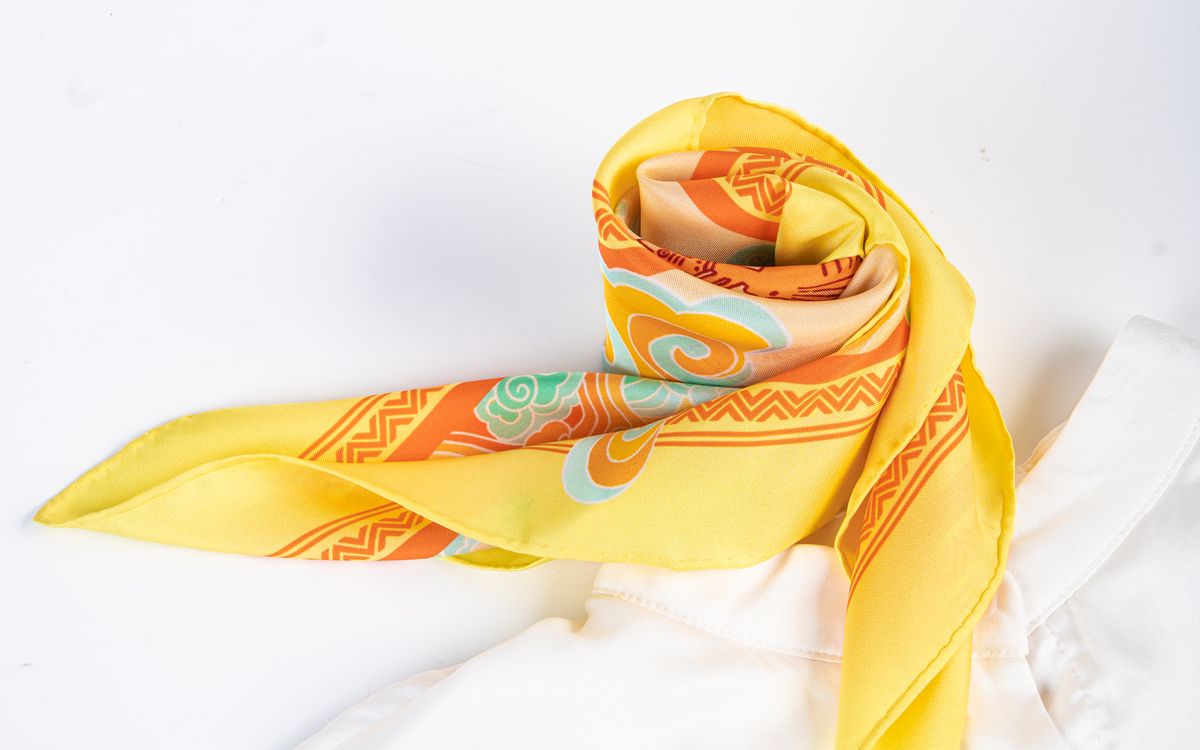
Silk is the rare apparel fabric sold with its own weight unit, and scarves are the product where it matters most — the same print from the same brand can exist in a weight light enough to halo through the air and one heavy enough to knot like linen. Momme is that number. This guide covers what the unit actually counts, where the useful scarf range sits on it, and how to estimate a scarf’s weight when the listing refuses to say.
Short answer
Momme (mm, pronounced “mommy”) is the weight in pounds of a 45-inch by 100-yard bolt of silk; higher means heavier and more silk per square meter. For scarves, 12-14 momme is the light, floaty standard, 16-19 is the versatile middle with a cleaner knot, and 22+ is the heavyweight tier where a scarf starts behaving like a small stole. If a listing omits momme, look for gsm (divide by roughly 4.3), then read the drape: weight in silk is visible before it is measurable.
What the momme number actually counts
Momme predates metric sizing and comes from the Japanese silk trade: one momme is the weight in pounds of a bolt of silk 45 inches wide and 100 yards long. A 16 momme charmeuse therefore weighs 16 pounds per that reference bolt, which converts to roughly 68-70 grams per square meter — the convenient approximation being one momme ≈ 4.3 gsm. The unit survives because silk is light: garment fabrics run from about 6 momme chiffon to about 30 momme for the heaviest apparel satins, so the whole usable scale compresses into a single-digit span where each step is a real, felt difference.
The compression is worth internalizing, because cotton thinking misleads here. A t-shirt jumps 160 to 240 gsm across “light” to “heavy”; silk makes the same qualitative journey across roughly 25 to 130 gsm. Each momme is proportionally a bigger step, which is why a 12 momme scarf and a 19 momme scarf in the identical print feel like different products, not different batches.
| Momme | Approx. gsm | Typical construction | Behavior as a scarf |
|---|---|---|---|
| 6-8 | 26-35 | Chiffon, organza | Sheer, airy, all drape and no body; knots vanish |
| 10-12 | 43-52 | Habotai, light charmeuse | Semi-sheer to opaque, fluid; the classic floaty scarf |
| 14-16 | 60-70 | Charmeuse, habotai | Opaque, clean drape, first weight that holds a tailored knot |
| 18-20 | 78-86 | Charmeuse, crepe de chine | Substantial hand, matte options appear, loops twice without bunching |
| 22-25 | 95-108 | Heavy charmeuse, crepe | Structured, warm, stole-like; edges and hems carry weight |
| 28-30+ | 120-130 | Weighted satins | Near-fabric weight; scarf territory becomes blanket territory |
One unit quirk: momme is abbreviated “mm” in trade documents, so “22mm silk” on a wholesale sheet means 22 momme, not millimeters. Retail listings usually spell it out, but the abbreviation leaks into product copy often enough to trip careful readers.
Where scarf weights actually sit
Most printed fashion scarves cluster in the 12-16 momme band. The reasons are practical: prints bleed less through tighter, heavier weaves, but weight multiplies fabric cost faster in silk than in any other fiber, and a scarf is judged at retail by how it floats on the display. Long staple mulberry silk at 12 momme already feels unmistakably silk — the cool hand, the liquid drape — so brands have little pressure to publish a heavier, pricier weave.
The bands behave differently in use. A 12 momme habotai scarf pools and floats; it ties into soft, loose knots and lets wind through, which makes it a three-season piece rather than a warm one. A 16-19 momme charmeuse has enough areal density to hold a fold — this is the weight where a scarf can be tied like an ascot, or looped twice with a defined roll, and where the reverse face of a satin weave is matte enough to read as a design feature. At 22 momme and above the scarf begins to behave like outerwear trim: it shades the neck in autumn wind, it drapes into vertical folds rather than cascades, and it can carry embroidered or painted decoration without puckering. The heavier end is also where silk starts to compete with wool as a winter accessory — a logic mapped across fibers in the scarf-material season guide.
Charmeuse, habotai, and crepe: weave changes the same number
Momme is weight, not weave, and two scarves at the same momme can feel like different materials. Charmeuse is the satin weave most people picture as “silk”: glossy face, matte back, liquid drape, and it shows off weight by flowing rather than floating. Habotai — the plain-weave “china silk” — is lighter-reading and slightly powdery in hand; at equal momme it looks more matte and drapes with a papery crispness. Crepe de chine and crinkle weaves introduce texture that breaks the light and gives grip, which is why heavy crepe scarves tie more securely than heavy charmeuse of the same weight.
Weave also mediates the durability-per-momme relationship. Satin weaves expose long floats on the glossy face, so a light charmeuse snags more readily than a light plain weave at the same momme; plain weaves put both yarn directions on the surface and wear more evenly. The practical read: for a scarf that lives in a bag with keys and coins, plain weave or crepe at 14-16 momme survives daily handling better than charmeuse at the same weight.
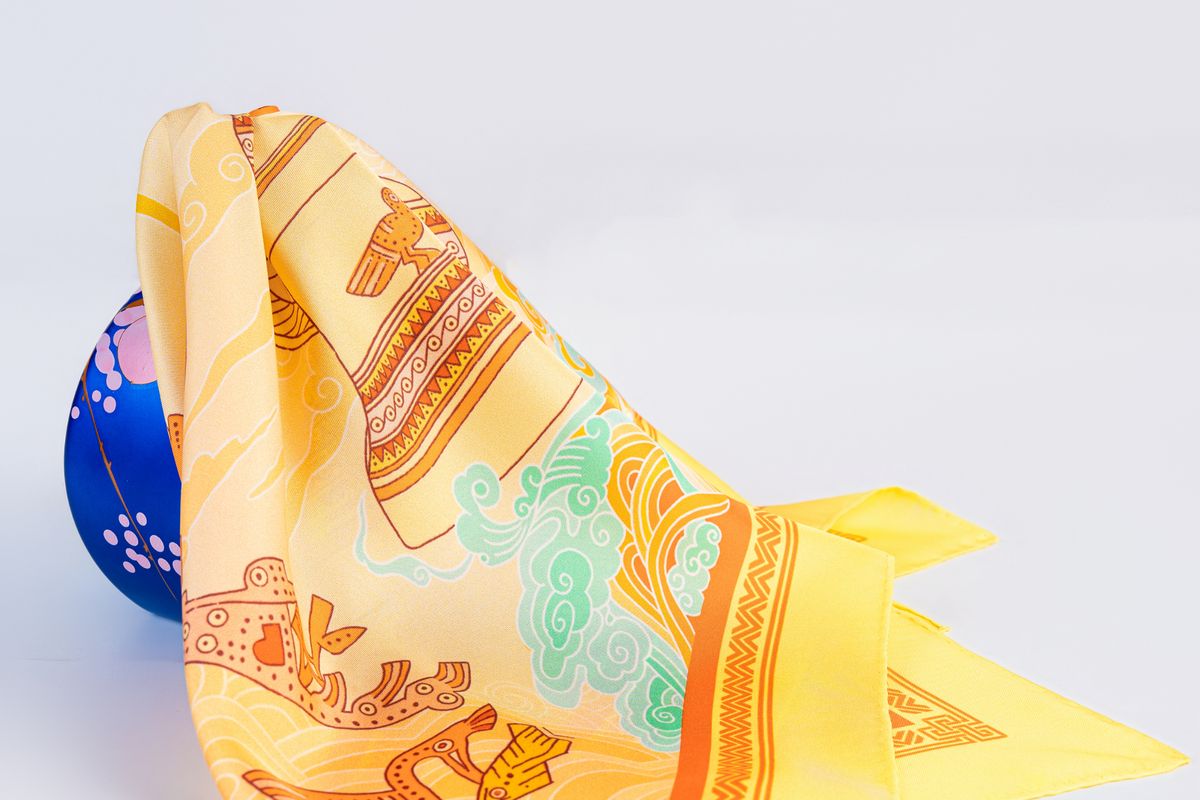
Reading weight when the listing omits it
Silk listings decline to state momme more often than not, especially outside specialist bedding and fabric sellers. Three workarounds, in descending order of reliability. First, grams per square meter: any seller who publishes gsm has answered the question, since momme ≈ gsm ÷ 4.3. Second, product class cues — the vocabulary maps cleanly enough to be usable in the weave-and-weight terminology guide, which covers the fabric rather than the scarf. Third, the physical reads that work in a shop or on arrival: hold the scarf by one corner and watch whether it falls in folds (heavier) or halos (lighter); rub the fabric between fingers to feel whether the weave grips (crepe, plain) or skates (satin); and hold it against light, since true opacity begins around 14 momme and is a hard stop below about 10.
| Clue on the listing or tag | Most likely weight band |
|---|---|
| “Chiffon”, “organza”, “gauze” in the fabric name | 6-8 momme |
| “Habotai” or “china silk”, plain weave, semi-sheer | 8-12 momme |
| Unqualified “100% mulberry silk”, satin face, opaque | 12-16 momme |
| “Heavyweight”, “dense”, or a stated gsm over 85 | 20+ momme |
| Stated gsm anywhere | momme ≈ gsm ÷ 4.3 |
The drape read deserves practice because it is weight-true. Silk’s density is uniform across brands — a gram of silk behaves like any other gram — so the fall of the fabric encodes the number even when the tag hides it. A corner-held 12 momme scarf flutters at the slightest breath; a 22 momme stole pours. Ten minutes in a store that sells both bands teaches the distinction faster than any spec sheet.
Weight, warmth, and the three-season question
Silk is often misfiled as a summer-only fiber, and momme is the reason the filing is wrong. Silk fiber itself insulates well for its weight — the same property that makes it a base-layer material — so a 22 momme scarf is a legitimate cold-weather accessory: dense enough to block wind at the collar, light enough to disappear under a coat. The lighter half of the scale, 12 momme and below, is the summer side: semi-sheer, fast-drying, and cool against the neck precisely because so little fabric is present.
This makes momme the primary selector for a silk scarf’s calendar. A single 16 momme charmeuse spans spring through autumn; a 12 momme habotai handles summer and evenings; a 22+ momme crepe or satin takes over for winter. Buying two weights covers the year with fewer pieces than buying one print in every colorway — the accessory logic of picking fabric by season rather than by pattern, whether the fiber is silk, cotton, or wool.
Care notes that scale with weight
Heavier silk is generally more forgiving silk. A 20+ momme scarf tolerates hand washing at the same temperatures that would stress an 8 momme chiffon, simply because the denser weave has more fibers sharing each load and fewer exposed floats to snag. Colorfastness tracks dye process more than weight, but deep prints on light-weight silk sit on less fiber, so fading shows sooner at the low end. The full decision tree — when water is safe, when dry cleaning earns its fee — is laid out in the silk wash-or-dryclean guide.
Storage advice also shifts with weight. Light scarves crease permanently under their own folds; hanging or loose rolling preserves them. Heavyweights store flat or folded like knitwear, and their only real enemy is the same one wool faces: moths, which find protein fiber as attractive in a scarf as in a sweater. Weight in silk, in other words, quietly determines not just how the scarf drapes but how it lives — one number, readable from three feet away once the eye is trained, deciding most of what a buyer actually cares about.
Frequently asked questions
- What momme is best for a silk scarf?
- For a scarf that ties and drapes rather than stands away from the body, 16 to 19 momme is the practical sweet spot: enough body for a clean knot, light enough to loop twice. Scarves below 12 momme read sheer and delicate, while 22 momme and above produce a substantial, almost woolly drape better suited to stoles and winter neckwear.
- Is a higher momme always better silk?
- No. Momme measures weight per unit area, not fiber quality — a poorly reeled, short-staple silk can be woven heavy, and a superb 16 momme charmeuse will outlast it. Higher momme does mean more silk per square meter, which brings opacity, durability, and a firmer hand, but grade of raw silk and weave quality are separate axes.
- Why don't scarf listings state momme?
- Scarf makers, especially fashion labels, sell by print and drape rather than by spec, so weight often appears only as '100% mulberry silk'. Apparel silk conventionally tops out around 22 to 30 momme, so absence of the number usually implies a lighter weave. Asking the seller for grams per square meter works as a substitute: divide gsm by roughly 4.3 to approximate momme.