Wool beanies by micron count: the number that decides if it itches
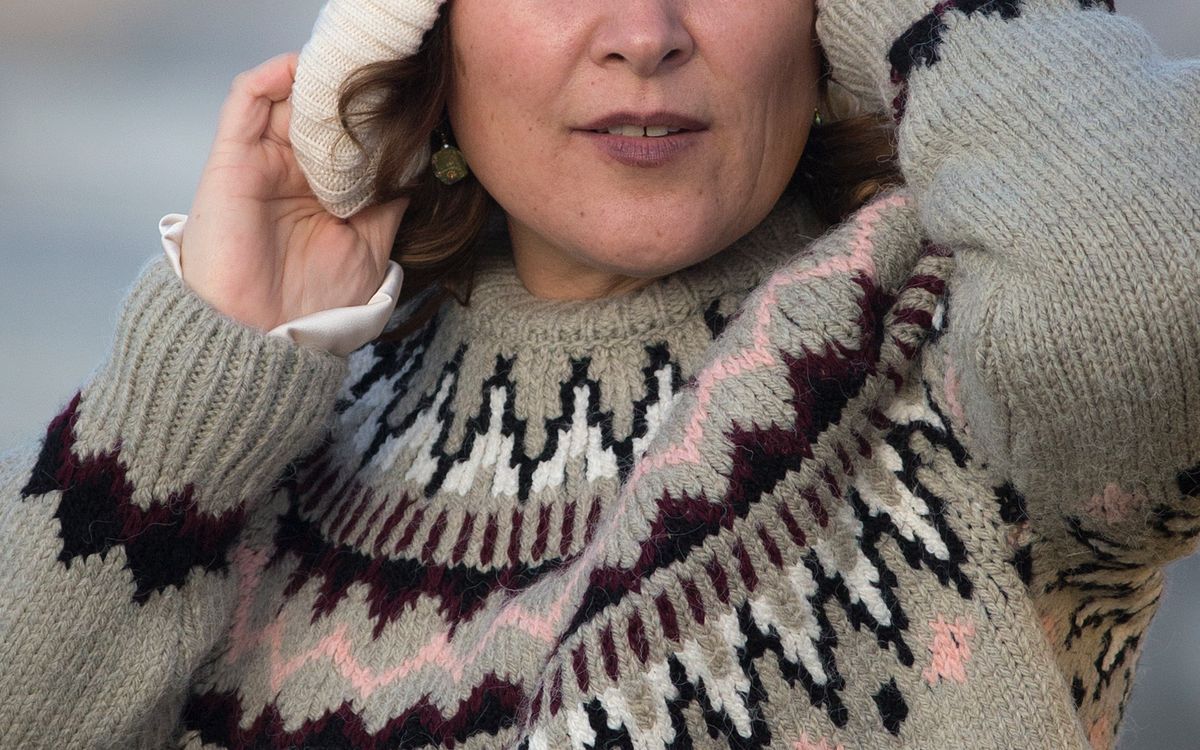
Micron measures the diameter of a wool fiber in micrometers; lower is finer and softer. For headwear — where fabric presses against bare forehead skin for hours — aim for merino at 19 microns or below, ideally 18.5 and under. Knit weight and layering decide warmth, not micron; micron decides comfort. Beanies that state their micron count are rare and worth their premium; the rest get judged by fiber content, blend ratios, and knit construction.
What micron actually measures
A micron is a micrometer — one millionth of a meter. Wool fiber diameter is measured by projecting the cross-sections of thousands of fibers and averaging their widths, a standardized test that yields a single mean figure, the average fiber diameter. Commercial wool spans roughly 11.5 microns (the finest superfine merino) to over 35 (coarse carpet wools), and the mean diameter is the single best predictor of how the fiber feels against skin: finer fibers bend more easily when pressed into skin and trigger fewer of the nerve endings that fire as “prickle.”
The scale is continuous but the industry sorts it into named grades, and those grades carry real feel differences:
| Grade | Micron range | Against skin |
|---|---|---|
| Ultrafine merino | under 15.5 | Soft by any standard; comparable to cashmere |
| Superfine merino | 15.5-18.5 | Comfortable for most wearers, all day |
| Fine merino | 18.5-20 | Comfortable for most; sensitive skin notices on forehead |
| Mid-micron merino | 20-23 | Soft in sweaters; borderline in beanies |
| Lambswool / conventional wool | roughly 24-30 | Noticeably pricky against bare skin |
| Coarse wools | 30+ | Rugs, outer layers only |
Human hair, for calibration, averages around 70 microns — coarse wool fibers approach half the thickness of a hair, which is exactly the difference your forehead notices.
Why the forehead is the strictest test
The same garment can feel fine on the torso and unbearable on the head, because prickle perception scales with contact pressure and skin sensitivity. A sweater’s wool sits over a t-shirt, under minimal pressure; a beanie’s knit presses directly onto the thin skin of the forehead and ears with the elastic tension that keeps it on. Skin regions also differ in nerve density, and the face is among the most sensitive areas the body has.
The practical consequence: micron thresholds are stricter for headwear than for any other wool garment. A 22-micron mid-micron merino that makes a perfectly pleasant crewneck becomes a five-minute irritant as a beanie. This is also why blends complicate the picture — a “wool beanie” that is 50% lambswool and 50% acrylic is effectively a coarse-wool beanie with a plastic co-fiber, and the acrylic portion holds sweat against the skin, which amplifies irritation. Fiber percentage and fiber fineness must both clear a bar for the hat to work; either one alone fails.
The blend reality: what “wool beanie” often means
Labels in this category are looser than in apparel, and a buyer’s first job is translating marketing terms into fiber facts:
| Label wording | What it usually is | Verdict for bare-skin wear |
|---|---|---|
| “100% merino” | All merino; micron often unstated | Best case; check micron if stated |
| “Merino wool” (no percentage) | Often a merino-nylon or merino-acrylic blend | Check the fiber content line |
| “Lambswool” | Coarser wool (mid-20s micron typically) from young sheep | Warm but pricky; a liner hat territory |
| “Wool blend” / “wool-feel” | Frequently majority acrylic | Not a wool hat in any functional sense |
| “Merino-cotton blend” | Real merino cut with cotton for softness and wash tolerance | Comfortable; slightly less elastic than pure merino |
Acrylic deserves specific mention because it dominates the budget shelf: it is warm, washable, cheap, and — for the purposes that matter here — non-absorbent. Sweat sits against the skin instead of moving into the fiber and evaporating, which is why acrylic beanies feel clammy during any exertion and why merino’s moisture handling is the honest technical argument for paying more. The micron question never gets asked about acrylic because there is no fiber diameter that fixes it.
Knit weight and layers: warmth is a different axis
Micron decides comfort; warmth is decided by how much air the knit traps. Beanies range from thin single-layer jersey knits (essentially the same 150-200 gsm fabric used in merino base layers) to chunky ribbed knits and double-layer constructions that roughly double the trapped air. Both axes matter and they are independent: a double-layer coarse-wool beanie is warmer and itchier; a single-layer 18-micron one is cooler and softer.
The warmest practical constructions stack three features — a heavyweight or interlock knit, a double layer of fabric, and a deep cuff that folds over the ears, since ears lose heat fastest and are also the most prickle-sensitive zone. A reversible double-layer hat gets extra credit because two full fabric faces mean no exposed float yarns inside the cuff. Fit tolerance matters too: hats sized by head circumference (many merino brands publish inch ranges) stay put during movement, while one-size acrylic knits rely on stretch and relax over a season.
Three beanies, compared on published specs
Because micron counts are rarely volunteered, it is worth looking at what current products actually disclose. Three widely sold merino beanies cover the useful spread — one pure-merino double-layer workhorse, one budget-pure-merino single knit, and one blend that trades some fiber for washability:
Smartwool Thermal Merino Reversible Cuffed Beanie
Minus33 Midweight Merino Wool Knit Cuff Beanie
Icebreaker Merino Icebreaker Beanie
The Smartwool hat is built from the brand’s Merino 250 base-layer fabric — a 100% merino double-layer interlock, reversible, with a cuffed cut; the published spec sheet gives no micron figure, but the construction (two full layers, no exposed interior floats) is the warmest of the three. The Minus33 beanie is the transparency standout: a double-layer midweight knit whose associated listing states 18.5-micron merino — squarely in the reliably-comfortable band — plus a stated fabric weight of 245 gsm, the most complete spec disclosure of the three. The Icebreaker beanie takes the blend route: 57% merino and 43% organically grown cotton in a double layer, with the product page listing its merino at 18.9 micron and the whole hat at 77 grams; the cotton share softens the hand further and makes it more wash-tolerant, at the cost of some elasticity and warmth compared to pure merino.
| Specification | Smartwool Thermal Merino Reversible Cuffed Beanie | Minus33 Midweight Merino Wool Knit Cuff Beanie | Icebreaker Merino Icebreaker Beanie |
|---|---|---|---|
| Fiber content | 100% merino | 100% merino | 57% merino, 43% organic cotton |
| Stated micron | Not stated | 18.5 micron | 18.9 micron |
| Knit construction | Double-layer interlock (Merino 250 fabric) | Double-layer midweight knit | Double layer, darts at peak |
| Stated weight | Not stated | 245 gsm fabric | 77 g whole hat |
| Distinctive feature | Reversible; two colorways in one hat | Most complete published spec sheet | Cotton blend softens hand, eases washing |
| Warmth class | Warmest of the three | Mid | Light-mid |
Fit, coverage, and the ear question
Micron solves comfort; coverage solves warmth, and the two choices interact. Ears are the first zone to hurt in cold wind, and hat designs divide sharply on whether they reach them: a shallow cuff worn flat leaves ears exposed; a deep cuff folded down covers them with a doubled layer of knit — doubling both warmth and, if the fiber is coarse, prickle. This is why deep-cuffed designs benefit disproportionately from fine merino: the fold puts two fabric faces directly against the ear skin, where a 19-micron threshold becomes non-negotiable.
Sizing is the other quiet failure mode. One-size knits depend on elastic recovery, and loose-knit hats stretch permanently within a season — the fix is either a snug ribbed knit or a hat sized to head circumference. Among merino options, many publish head-size ranges (roughly 17 to 25 inches covers the adult span), which keeps the fit predictable through wash cycles. Recovery also varies by fiber: pure merino recovers from stretch better than cotton-blend knits, another small argument for keeping the synthetic share zero and the cotton share modest.
Caring for a fine knit without felting it
Fine merino knits carry a specific care failure: felting. Washing with heat, agitation, or alkaline detergent lets the microscopic scales on each fiber interlock permanently, turning a soft beanie into a smaller, stiffer one — the same mechanism that shrinks a sweater, concentrated in a hat that gets handled more. Cold water, wool detergent, and a flat dry solve it; the complete method, including what to do when the damage is done, is laid out in [the guide to washing merino without shrinkage](/articles/wash-merino-without-shrink/.
Between washes, wool’s natural odor resistance means airing usually replaces laundering — a merino beanie worn daily can go a full winter on two or three washes. Storage is a non-issue compared to sweaters (no hanger stretch), but moths find fine knits as attractive as heavy ones, so off-season storage with the wool care routine applies. Anyone weighing whether the fabric logic holds for other garments — why weave and fiber specs, not labels, decide how things wear — will find the same principles scaled up in the chambray-versus-denim comparison, and the label-reading guide covers how to spot which spec lines a product page is quietly omitting.
The picks
Some links below are affiliate links — we may earn a commission at no extra cost to you.
Smartwool Thermal Merino Reversible Cuffed Beanie
A double-layer interlock knit built from 100% merino Merino 250 fabric — the warmest construction of the three, reversible for two colorways, with no exposed interior floats against the skin.
Minus33 Midweight Merino Wool Knit Cuff Beanie
The most complete published spec sheet of any beanie in the category: stated 18.5-micron merino, 245 gsm double-layer midweight knit — squarely in the reliably soft band for bare-skin wear.
Icebreaker Merino Icebreaker Beanie
Double-layer knit in 57% merino and 43% organically grown cotton, with the merino listed at 18.9 micron — the cotton share softens the hand further and makes the hat the most wash-tolerant of the three.
Comparison
| Specification | Smartwool Thermal Merino Reversible Cuffed Beanie | Minus33 Midweight Merino Wool Knit Cuff Beanie | Icebreaker Merino Icebreaker Beanie |
|---|---|---|---|
| Fiber content | 100% merino | 100% merino | 57% merino, 43% organic cotton |
| Stated micron | Not stated | 18.5 micron | 18.9 micron |
| Knit construction | Double-layer interlock (Merino 250 fabric) | Double-layer midweight knit | Double layer, darts at peak |
| Stated weight | Not stated | 245 gsm fabric | 77 g whole hat |
| Distinctive feature | Reversible — two colorways in one hat | Most complete published spec sheet | Cotton blend softens hand, eases washing |
| Warmth class | Warmest of the three | Mid | Light-mid |
Specifications as published on the makers' product pages, checked November 2026.
Sources
- Smartwool product page for the Thermal Merino Reversible Cuffed Beanie (smartwool.com), for the 100% merino Merino 250 double-layer construction, checked November 2026
- Minus33 product listing for the Midweight Merino Wool Knit Cuff Beanie (minus33.com), for the stated 18.5-micron merino and 245 gsm fabric weight, checked November 2026
- Icebreaker product page for the Merino Icebreaker Beanie (icebreaker.com, style IB0A56SJ0GN), for the 57/43 merino-cotton content, 18.9 micron merino fiber, and 77 g product weight, checked November 2026
Frequently asked questions
- What micron count wool won't itch?
- For most people, merino at 19 microns or finer feels comfortable against the forehead and ears, and anything under 18.5 microns is reliably soft. Comfort also depends on contact area and skin sensitivity, so a 19-micron blend worn all day may still bother sensitive skin that tolerates it in a sweater.
- Is a higher micron count warmer?
- No. Warmth comes from trapped air — knit thickness, layering, and cuff depth — not fiber diameter. Micron measures softness. A coarse-knit 24-micron beanie is warmer than a thin 17.5-micron one, but it will also feel pricker against bare skin.
- What micron is cashmere compared to merino?
- Cashmere runs roughly 14 to 19 microns, overlapping fine merino but typically averaging a few microns finer. That is why cashmere feels softer at similar knit weights. Merino's advantage is durability and price: at equal micron counts, merino fiber tolerates more wear before pilling or breaking.