Upholstery-grade fabrics for clothing: where home textile ends and apparel begins
Fabric stores and deadstock sellers often offer upholstery-grade cloth at apparel prices, and the temptation is real: furnishing fabrics arrive thick, dense, and clearly durable. But “upholstery grade” describes a different test than the one a garment must pass. A chair tests a fabric for years of abrasion in one position; a jacket tests it for thousands of flex cycles at the elbow in a single afternoon. Understanding what each grade is optimized for separates the crossover fabrics from the expensive mistakes.
Short answer
Upholstery-grade fabric is built for flat-surface durability: heavy yarns, tight flat weaves, stiff finishes, and abrasion ratings in the tens of thousands of rub cycles. Apparel fabric trades some of that toughness for drape, bend recovery, and skin comfort. The two worlds overlap in a narrow band — wide-wale corduroy, heavyweight canvas, and dense furnishing twills work as outerwear and structured trousers — but most upholstery cloth produces garments that stand up on their own and never soften where the body needs them to.
What upholstery grade actually means
Furnishing textiles are specified against a different checklist than apparel cloth. The core measure is abrasion: upholstery fabrics are commonly rated by rub tests (Wyzenbeek double rubs or Martindale cycles) that run into the tens of thousands of cycles for household use and higher for contract use. Apparel fabric is rarely rated for abrasion at all, because the failure modes of clothing are different — a shirt gives up through pilling, seam stress, and wash wear long before it wears through by rubbing.
The other pillars of the upholstery spec:
- Lightfastness. Fabric by a window fades; the colorfastness requirements for furnishing cloth are set accordingly and are far above what an indoor garment needs.
- Dimensional stability. Upholstery must stay taut on a frame for years, so the cloth is engineered to neither stretch nor sag — the opposite of what drape requires.
- Pilling and surface wear. A tight, flat face resists fuzzing. This is achieved with heavier yarns and dense weaves, which also cost the fabric its softness.
- Finish chemistry. Stain resistance and soil-release treatments are common on furnishing cloth and uncommon on apparel, where finish regulations and next-to-skin considerations are stricter.
None of these properties is a defect. They are simply aimed at a chair, and a chair never needs to bend.
The weight divide, translated
Weight is where the two categories diverge most visibly. The table below sets typical ranges side by side, using gsm on both sides so the comparison is direct. The overlap band at the bottom is where the interesting garments live.
| Use case | Typical fabric weight | Character under a body |
|---|---|---|
| Apparel: shirts and blouses | 100-200 gsm | Drapes, flexes, breathes |
| Apparel: trousers and jackets | 220-400 gsm | Structured but bends at all joints |
| Apparel: heavy coats | 400-700 gsm | Massive, still engineered to flex |
| Home: curtains and light drapery | 200-350 gsm | Soft, but sized for hang, not wear |
| Home: general upholstery | 350-500 gsm | Firm; bends poorly, resists rubbing |
| Home: heavy-duty / contract upholstery | 450-600+ gsm | Very firm; near-rigid against skin |
The numbers show why confusion happens: light drapery and apparel trousers share a weight band. Weight alone does not decide the category — weave density, yarn stiffness, and finish do. A 350 gsm furnishing twill and a 350 gsm melton jacketing cloth can sit in the same weight class while behaving completely differently on a body. Where a given weight lands on the body is the subject of the gsm weight map.
The crossover fabrics that genuinely work
A handful of furnishing-adjacent fabrics have always served both worlds, and they are the honest answer to the “can I wear this” question.
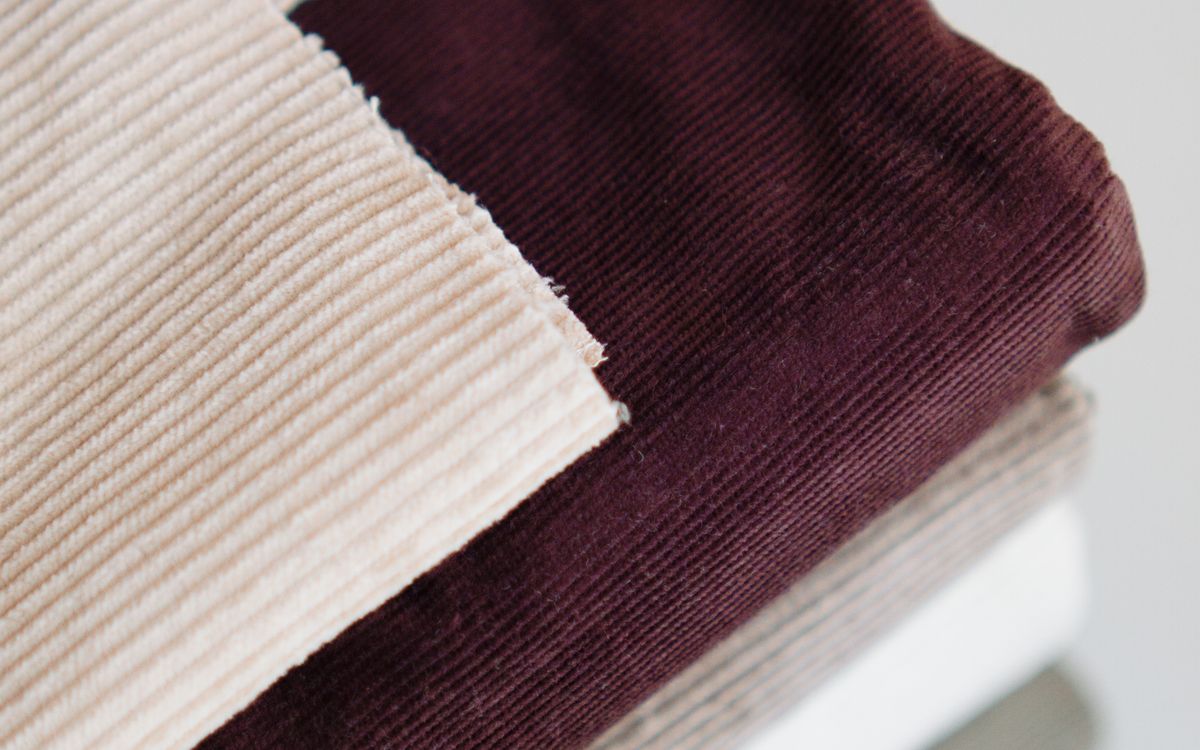
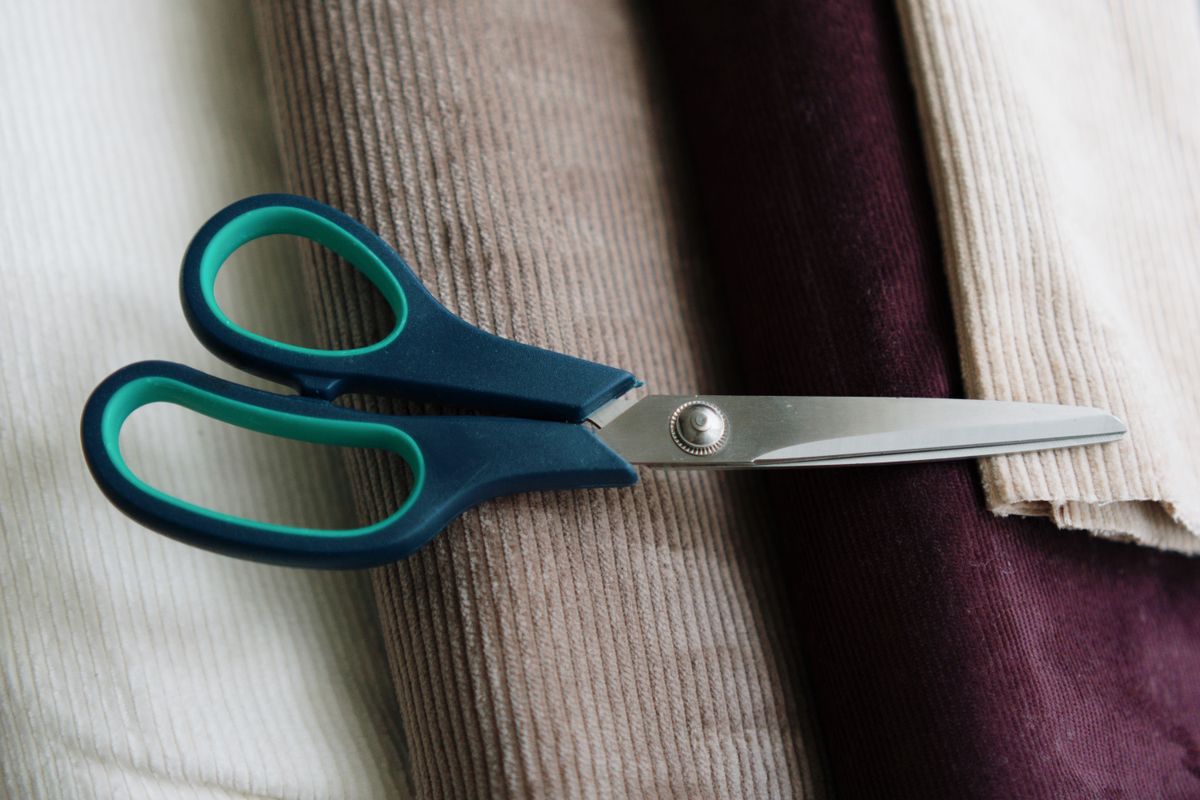
- Corduroy. The same family covers both categories: fine- to mid-wale corduroy is standard apparel cloth, while wide-wale, heavyweight corduroy shows up in furnishings and makes excellent overshirts and trousers with real structure. The deciding variable is the wale count and backing weight, not the category label — the corduroy wale guide maps which widths belong to which garment.
- Canvas and duck. Heavyweight cotton canvas is simultaneously a furnishing staple and the classic workwear outerwear fabric. A 12-14 oz canvas reads as a jacket; the same cloth in a furnishing roll reads as a stool cover. The difference is the finish, not the weave.
- Dense furnishing twills. Some worsted-style and heavy cotton twills sold for furnishings cross into trousers and chore coats acceptably, provided the cloth has no stiff backing and softens with washing.
- Linen furnishing cloth. Heavy linen sold for cushions often works as unstructured jackets, because linen softens faster than cotton of the same weight.
What all four share is a weave that predates the modern split between the categories: these fabrics spent centuries as both workwear and household cloth before marketing divided them.
Why upholstery cloth usually fails as clothing
The failures are predictable and worth naming, because they trace directly to the spec sheet rather than to any lack of quality:
- No bend recovery at the joints. A tight flat weave optimized for abrasion has little yarn slack, so it resists flexing at elbows and knees. Garments made from it develop hard creases and stress lines instead of soft folds.
- Sizing that never fully washes out. Furnishing finishes are designed to persist. Even after laundering, the hand often remains boardier than an apparel equivalent.
- Weight in the wrong places. A 450 gsm upholstery twill worn as trousers concentrates its stiffness across the seat and thigh, moving as one panel. A 450 gsm wool jacketing cloth is engineered to break at the knee.
- Breathability cost. Denser weaves trap less moving air; worn against skin in warm weather, heavy furnishing cloth runs noticeably hotter than garment cloth of similar weight.
- Seam behavior. Heavy, stiff cloth stresses standard apparel seams; home-sewn garments from upholstery fabric often fail at the seam before the cloth itself shows wear.
None of this rules the cloth out — it defines what the garment must be. Stiff, dense cloth succeeds in patterns that exploit structure: chore coats, bucket hats, structured skirts, market totes. It fails in patterns that need drape.
Reading a label when the fabric crosses categories
Fabric sellers increasingly blur the line — “multi-purpose”, “heavyweight apparel”, “furnishing grade” — so the practical check is the spec line, not the category word. When buying cloth intended for wear:
| Spec line | What confirms apparel use | What warns of furnishing origin |
|---|---|---|
| Weight | 150-400 gsm, stated in gsm or oz | 450+ gsm with no flexibility note |
| Composition | Fiber content with staple or spinning detail | Content plus “abrasion rated” language |
| Finish | Washed, garment-washed, or unfinished | Stain-release, soil-resistant, or backed |
| Rating | None, or shrinkage and care data | Double-rub or Martindale figures |
Rub-test figures on a listing are not a warning sign by themselves — heavy denim and canvas occasionally carry them — but they are the clearest signal that the cloth was qualified for a chair. Backing and stiff finishes are stronger signals still. When the spec sheet is silent on hand and drape but loud on durability, the cloth is speaking about a sofa.
Where the boundary actually pays off
The useful conclusion is not “never wear furnishing fabric” but “wear it where its stiffness is a feature.” Three garment families reliably reward upholstery-grade cloth: workwear-adjacent outerwear (chore and field jackets in heavy canvas or wide-wale corduroy), structured accessories (totes and caps, where rigidity is the point), and hard-wearing casual trousers cut with room, where a 400 gsm dense twill wears like the work trousers it historically was. Canvas at jacket weight is the archetype, and the full range of weights and stiffness is covered in the canvas jacket guide. Everything more drape-dependent — shirts, soft trousers, anything lined and close to the body — belongs to apparel-grade cloth, and no abrasion rating changes that.
Frequently asked questions
- Can you wear upholstery fabric?
- Technically yes, practically rarely. Upholstery cloth is engineered for abrasion resistance and dimensional stability on a flat surface, not for drape, softness, and comfort against moving skin. Most upholstery-grade fabric makes stiff, heavy garments — though wide-wale corduroy, heavyweight canvas, and some furnishing twills cross over successfully as outerwear or structured trousers.
- Why is upholstery fabric so much stiffer than apparel fabric?
- Three reasons: heavier yarns and tighter, flatter weaves that resist abrasion; stiffer finishes and backings that keep fabric from shifting on a frame; and sizing that prioritizes a smooth flat face over the soft hand a garment needs. Apparel fabric must flex at elbows, knees, and waist, so it is woven looser and finished softer from the start.
- Is upholstery-grade fabric better quality because it is heavier?
- No — it is differently optimized. Abrasion resistance, lightfastness, and stain performance matter on a chair; drape, breathability, and bend recovery matter on a body. A fabric can be excellent at the first set and mediocre at the second. Grade describes fitness for a purpose, not a universal quality ranking.