Corduroy wale numbers: how the ridge count decides the look, weight, and season
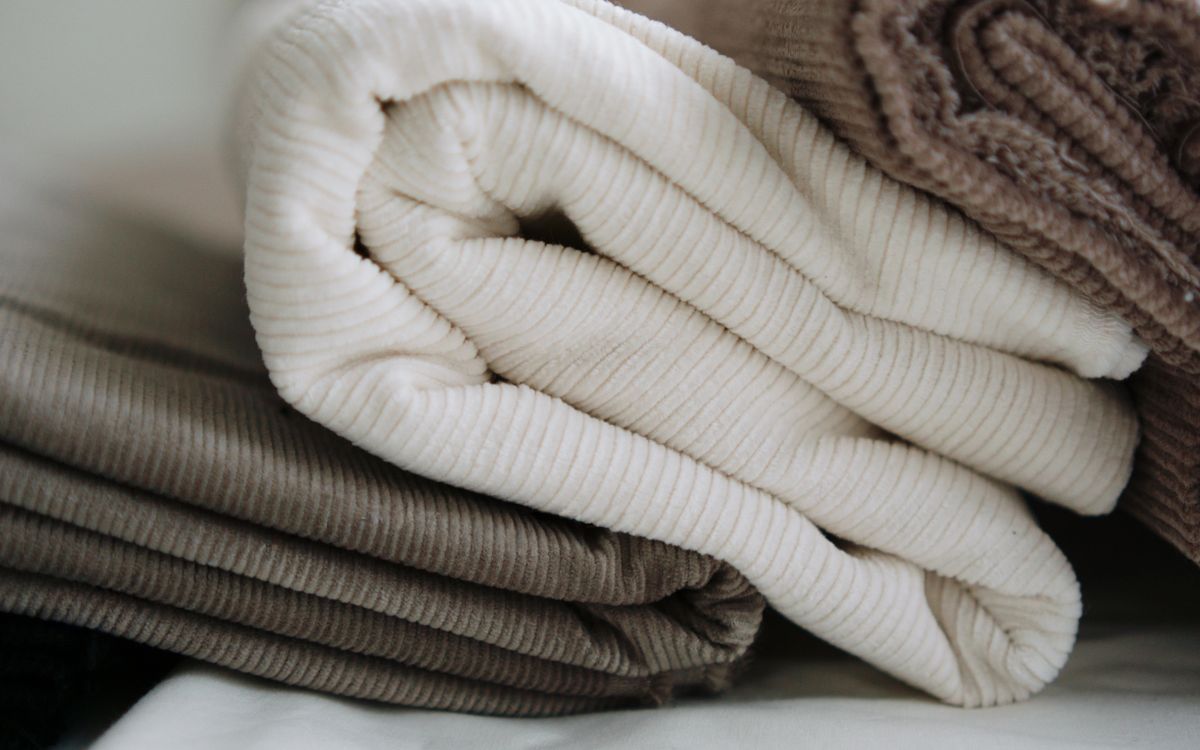
Corduroy is one of the few fabrics that announces its construction from across a room — the parallel ridges are the fabric’s whole personality, and the industry compresses that personality into a single number: wales per inch. The wale number decides how bold the fabric reads, what season it suits, which garment it becomes, and how it wears. This guide explains what the number counts, how the ranges map to real garments, and what to check before buying a corduroy piece.
Short answer
Wale number is the count of ridges per inch: roughly 16-21 for pinwale (fine, dressy), 8-14 for mid-wale (the classic jacket and trouser corduroy), and below 8 for wide-wale and jumbo (bold, casual, autumnal). Finer wales read more refined and lighter; wider wales read more rugged and heavier, with more pile exposed to wear. For most wardrobes, mid-wale at a midweight covers trousers and jackets across the whole cool season.
What the wale number counts
Corduroy is a cut-pile weave: the ground cloth carries extra float yarns that are sliced in manufacture, and those cut ends brush up into the vertical pile that forms the ridges. Between the ridges run recessed channels called sunken lines, where the bare ground weave shows. The wale number simply counts the ridge-and-channel repeats per inch of fabric — so 8-wale corduroy shows eight ridges across every inch, and 16-wale shows twice as many, each half as wide.
The arithmetic explains everything the number predicts. At a given overall fabric weight, more wales per inch means each ridge is narrower, carries less pile, and sits closer to its neighbors — the fabric reads as fine texture. Fewer wales means each ridge is broad, with a deep channel between — the fabric reads as stripes and carries more surface pile. The visual difference is the difference between a fabric that reads almost solid from a meter away and one that reads unmistakably as corduroy.
| Wale range | Common name | Ridge look | Typical garments |
|---|---|---|---|
| 16-21 wpi | Pinwale / needlecord | Barely-there fine ribbing | Dress trousers, blazers, fine shirting |
| 11-14 wpi | Fine to mid-fine | Subtle but visible | Shirt jackets, lighter trousers |
| 8-10 wpi | Mid-wale / standard | The classic corduroy look | Jackets, trousers, dresses, caps |
| 4-7 wpi | Wide-wale | Bold stripes, deep texture | Heavy trousers, chore jackets |
| Below 4 wpi | Jumbo / broadwale | Very bold, nearly sculptural | Statement coats, upholstery |
How wale maps to weight and season
Wale and weight move together in practice, though they are separable variables. Fine corduroys are usually cut from lighter grounds — a pinwale trouser fabric might run in the low-200 gsm range, light enough for a shirt-weight feel — while wide-wale and jumbo fabrics are built on heavier grounds with deeper pile, pushing past 350 gsm toward the coat-weight band shared with heavy canvas and wool coating. The overlap with the general gsm weight map is close: most corduroy garments live between 250 and 400 gsm.
The seasonal read follows directly. Fine-wale, lighter corduroy passes for a dress trouser or a blazer fabric in autumn — it photographs almost like a fine twill, and the ridge texture reads as character rather than costume. Mid-wale at midweight is the four-season-shoulder standard: substantial enough for October, not so heavy it becomes indoor-unwearable in heated rooms. Wide-wale is the deep-winter, outdoor, weekend fabric — bold, warm-looking, and casual by construction. Because corduroy is almost always cotton, its breathability and cold-weather behavior track the same cotton trouser fabrics mapped in the chino weight guide, just with a pile layer added on top.
The wearing question: where corduroy rubs out
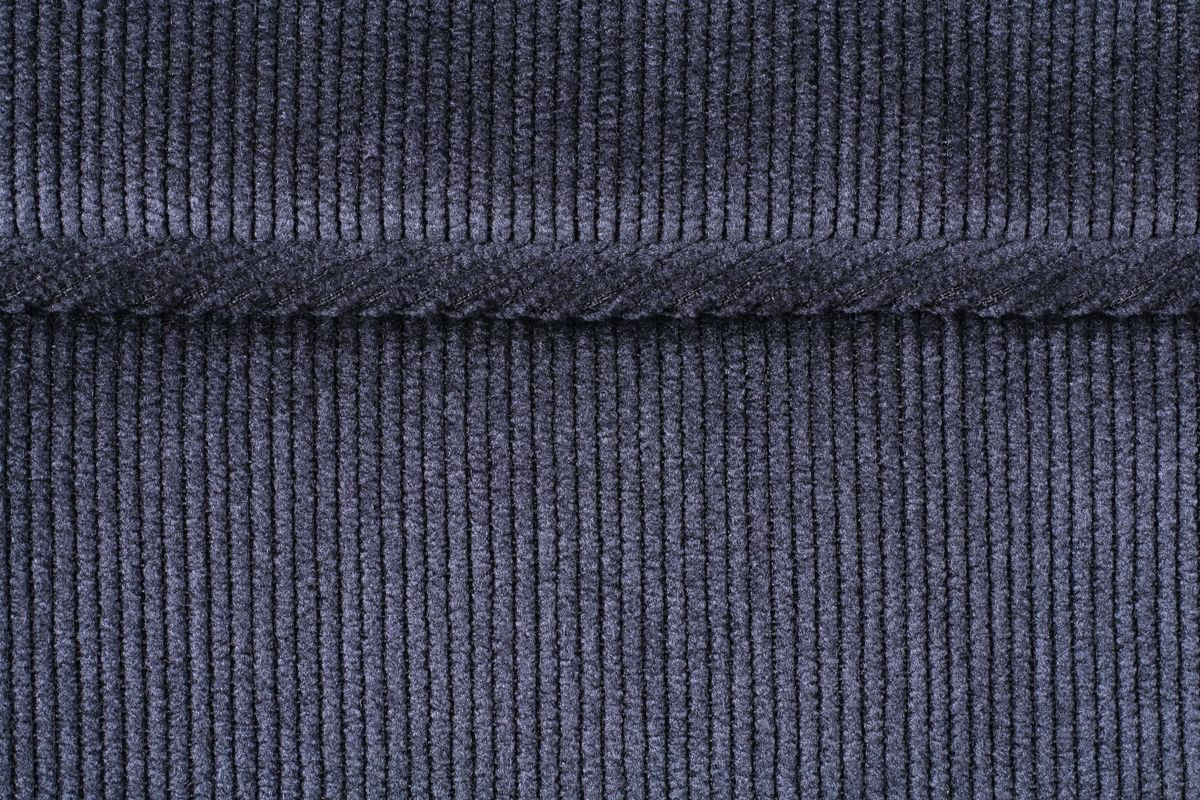
Corduroy’s durability profile is unusual because its working surface is pile, not ground weave. Under repeated abrasion the pile in high-wear zones — elbows, cuffs, seat, pocket edges — compresses and eventually wears down toward the recessed ground, which is why old corduroy garments fail first at the folds and shine there before they thin anywhere else. Finer wales shelter better: with ridges close together, any single abrasion point spreads across many shallow ridges, while a wide-wale elbow presents one broad, tall pile surface to the desk edge, chair, or bag strap.
The consequence for buyers is a simple matching rule: the more abrasion the garment’s life involves, the heavier and finer-balanced the corduroy should be. A desk-bound season of mid-wale trousers will develop seat shine; a heavy wide-wale chore jacket is built for exactly that kind of friction and will show it as crushed pile rather than actual thinning. Crushed pile is recoverable — steam and a soft brush lift it again — while worn-through pile is a repair job, not a grooming one.
Garment logic by wale
The wale number effectively pre-selects the garment. Fine wales read formal-adjacent, wide wales read workwear, and the middle band is the everyday core. The table below is the practical mapping most corduroy manufacturers design around.
| Garment | Typical wale | Why it works there |
|---|---|---|
| Dress trousers, blazers | 16-21 wpi | Reads as refined texture, not novelty; drapes from the lighter ground |
| Shirt jackets, overshirts | 11-14 wpi | Substantial but light enough to layer |
| Classic jackets and trousers | 8-10 wpi | The balance point of character, weight, and wear life |
| Chore and work jackets | 4-7 wpi | Deep pile, heavy ground, abrasion tolerance |
| Statement coats | Below 4 wpi | Boldness is the point; worn rarely, worn long |
One adjacent check belongs here: corduroy is a pile fabric in the same family as velvet and velveteen, and the same pile-down, brush-up logic governs its grooming. The difference is structural — corduroy’s pile is organized into ridges while velvet’s is uniform — but the care instincts transfer.
Care: washing, drying, and keeping the pile up
Corduroy laundering is gentle-cotton laundering with two pile-specific additions. Wash cool on a gentle cycle, inside out, with like colors — the pile collects lint from other laundry, and turning the garment in protects the ridges from drum friction. Skip the hot dryer: heat plus tumbling crushes pile and can set the ridges askew; a low-heat tumble briefly or, better, hang-dry while damp, then finish with a brush.
Two habits keep the surface looking new. First, brush the pile regularly with a soft garment brush in the direction of the ridges — this keeps the pile upright, evens out wear shine, and removes the lint that otherwise packs into the channels. Second, restore crushed patches with steam: hold the garment over a kettle or iron steaming at a distance, then brush the pile upright while warm. Deep storage creases in heavy wide-wale respond slowly, so folding corduroy with the pile out and padded folds — or hanging heavy garments on broad hangers — prevents most of it.
Reading a corduroy listing before buying
Product pages rarely volunteer the wale number, so it has to be inferred from three disclosed variables. Fabric weight: a stated 300+ gsm cotton corduroy is mid-to-wide wale territory; a 220 gsm one is fine. Garment type: “needlecord trousers” names the wale explicitly, while an unadorned “corduroy jacket” is usually mid-wale by convention. Photographs: counting ridges across the visible pocket width or cuff gives a rough wale estimate — eight ridges across a two-inch cuff frame reads as mid-wale.
| Listing clue | What it suggests | What to still confirm |
|---|---|---|
| “Needlecord” or “pinwale” named | 16+ wpi, dressier, lighter | Ground weight and fit, since fine corduroy drapes loosely |
| “Corduroy” unqualified, 280-320 gsm | Mid-wale, the default jacket/trouser build | Stretch content and lining |
| “Wide-wale” or visible bold ribs | Heavy, casual, autumn garment | Pile depth and ground quality, which decide wear life |
The last check is the same one that closes out any fabric purchase: the fiber line and care row on the label, since nearly all corduroy is cotton but stretch corduroys blend in elastane and some modern pieces use recycled fiber bodies — the same recycled-content questions covered in the recycled polyester guide. A corduroy garment that states weight, wale, and fiber is telling you everything that matters; one that states only “corduroy” is asking you to count the ridges in the photograph.
Frequently asked questions
- What does wale number actually count?
- The number of ridges (wales) per inch of fabric. Pinwale corduroy runs roughly 16 to 21 wales per inch, standard or mid-wale sits around 8 to 14, and wide-wale runs 8 or fewer, with jumbo variables below 4. A higher wale number means finer, denser ridges; a lower number means bolder, wider ones.
- Is wide-wale or fine-wale corduroy more durable?
- Durability follows weight and construction more than wale count. A wide-wale corduroy of the same weight has larger exposed pile areas that wear down faster under repeated abrasion, while fine-wale ridges are better sheltered between close-set channels. In practice, heavy mid-wale and wide-wale garments last for years if the backing weave is solid; thin pinwale wears at the elbow folds first.
- Why does my corduroy look flat or shiny in spots?
- The pile has been crushed. Prolonged pressure from sitting, bag straps, or tight closet storage flattens the velvet-like pile, which reads as shiny or color-darkened patches. Steaming the area and brushing the pile upright with a soft brush restores it; heat and agitation in a hot dryer can also crush pile permanently, which is why gentle washing matters.