Cashmere grades: fiber length, weight, and pilling explained
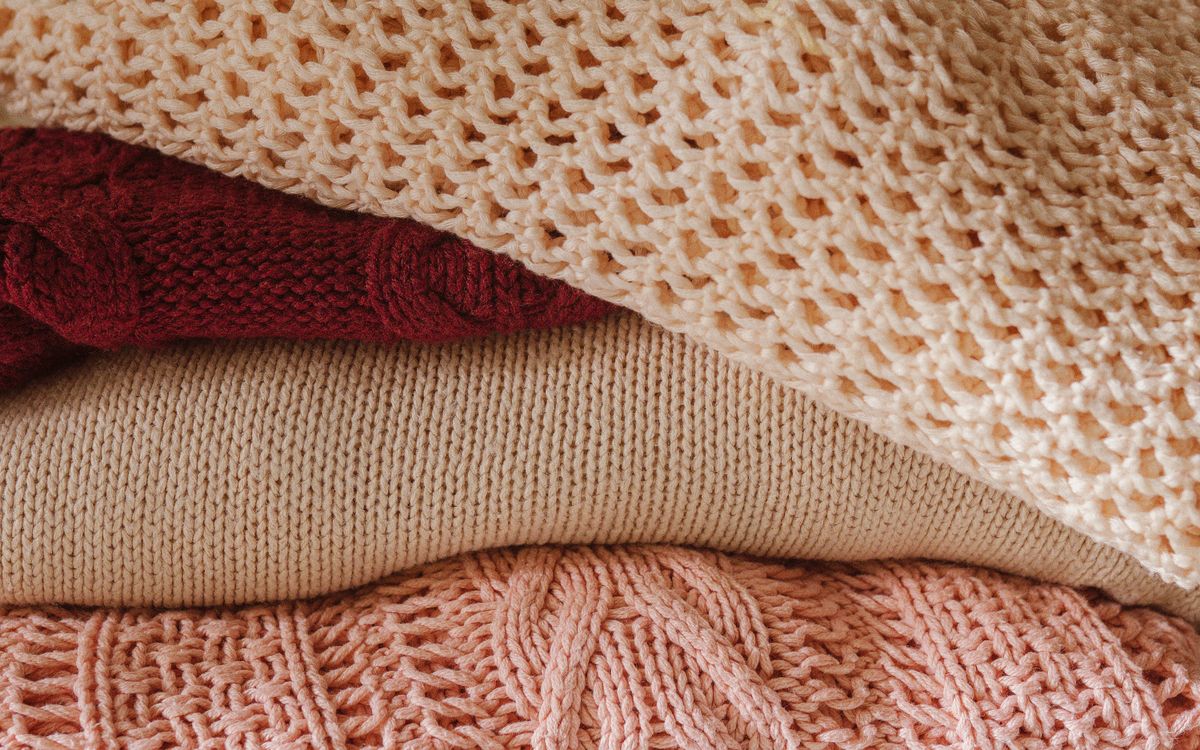
Cashmere labels compress a lot of variation into one word, and the word “cashmere” itself only certifies the species of goat — nothing about fiber length, diameter, or how the knit will behave after a month of wear. This guide walks through the grading terms sellers use, the two fiber measurements that actually predict softness and pilling, and the weight figures that separate a featherweight layering piece from a winter one.
Short answer
Cashmere grade is an industry convention, not a law: grade A means roughly 15-16 micron or finer fiber with long staple, grade B runs coarser, grade C coarser and shorter still. Softness tracks fiber diameter; pilling tracks fiber length and knit density; warmth tracks weight and ply, not grade alone. A sweater that pills within weeks is short-fiber cashmere regardless of what the tag says.
What “grade” actually means — and doesn’t
The grade A / B / C scale comes from fiber sourcing and mill sorting, not from any government standard. Roughly speaking, grade A cashmere is the long, fine fiber from the undercoat’s best sections — commonly around 15-16 microns in diameter with staple lengths above roughly 34 mm. Grade B is a step coarser and shorter. Grade C, the coarsest and shortest, feels noticeably denser and rougher and is what most low-price cashmere is spun from.
Because no labeling law enforces these terms, the grade word travels on trust. What can be checked is the geography claim and the fiber measurements where a seller volunteers them: Inner Mongolian fiber, particularly from the Alashan region, has a long-standing reputation for long staple and fine diameter, which is why so many premium labels name it. A listing that says only “100% cashmere, grade A quality” with no origin, no micron figure, and no weight is asking you to buy the adjective.
| Grade (industry usage) | Typical fiber diameter | Typical staple length | What it feels like new | What it does after a season |
|---|---|---|---|---|
| A | Roughly 15-16 micron or finer | Long, roughly 34 mm+ | Silky, light against skin | Softens; minimal pilling |
| B | Roughly 16-18 micron | Medium | Soft but slightly denser | Some fuzzing at friction points |
| C | Roughly 19 micron and up | Short | Warmer-looking, more wiry | Pills early, loses surface |
The two numbers behind softness: diameter and length
Fiber diameter, measured in microns, is what skin reads as softness. Cashmere sits roughly in the 14-19 micron band, which is finer than most wool — the practical consequence is that a fine, low-micron cashmere reads as silky while a high-micron one reads as merely soft-ish, the same distinction that separates fine from coarse merino wool. Below roughly 15 microns the difference stops being about scratch and starts being about drape: the finest yarns produce knits that hang rather than stand.
Staple length — how long each individual fiber is — is the pilling variable. Long fibers anchor into the yarn over a greater distance, so their ends resist working loose; short fibers shed their ends to the surface at every friction point, cuffs and seat and crossbody-bag contact above all. This is the same mechanism that governs pilling in cotton and wool knits, which is why the fix for a pilling-prone sweater is never the shave alone — the root cause is fiber length, as covered in the knitwear pilling guide.
Ply and weight: the warmth variables
Grade describes the fiber; ply and weight describe the yarn and the fabric made from it. Ply is the number of strands twisted into a single yarn — two-ply is the baseline for a well-made sweater, because a single-ply yarn is fragile and knits up thin and loosely. Weight, in grams per square meter for fabric or total garment grams, is what actually predicts warmth: a heavy gauge sweater at 400 grams and up is a winter piece, while 200-gram territory is a layering piece for cool evenings.
| Knit description | Typical total weight | Season | Trade-off |
|---|---|---|---|
| Featherweight, 1-2 ply | Roughly 150-220 g | Cool evenings, indoors | Sheer-ish, delicate, best layered |
| Midweight, 2-3 ply | Roughly 250-350 g | Three-season | The versatile core of a cashmere wardrobe |
| Heavy gauge, 4+ ply | Roughly 400 g and up | Winter | Dense and warm; also the heaviest to pack |
Note that ply and weight do not move independently. Extra plies add mass and density together, which is why a four-ply sweater is both warmer and more abrasion-tolerant than a two-ply one spun from identical fiber. What ply cannot rescue is poor fiber: density shortens the fuzz length but a short-staple sweater still pills.
Pilling: what actually predicts it
Friction pilling needs three ingredients, and cashmere supplies them all to some degree: soft fiber (weak enough to break), loose fiber ends, and a knit open enough to let ends migrate to the surface. The variable that matters most is staple length, and the second is knit density. This is why a tight, heavy two-ply in grade A fiber can outlast a loose featherweight in nominally the same grade by years — the grade word covered only the diameter.
Two practical readings follow. First, pilling concentrated at cuffs, hem, and the seat is friction pilling and is normal in any cashmere; pilling across the whole body within a few wears signals short fiber. Second, pilling can be managed but not cured: a fabric shaver with a knit-safe head keeps a good sweater presentable, as covered in the care guides, but the sweater that never needed shaving in the first place was the long-staple one.
Reading a cashmere listing: the four checks
Where a label or product page volunteers numbers, four are worth scanning for. Origin: named fiber regions (Inner Mongolia and Alashan above all) signal a supply chain the brand can describe. Diameter or grade: any micron figure is a better signal than the word “grade A” alone. Weight: a stated garment weight in grams is the single most useful number for predicting warmth and substance. Ply: two-ply or better is the baseline for anything meant to last.
| Listing line | What it tells you | What it hides |
|---|---|---|
| “100% cashmere” | Fiber species only — legally enforced | Length, diameter, density |
| “Grade A Inner Mongolian” | Claimed fiber tier and origin | Knit density, ply, weight |
| “2-ply, 280 g” | Yarn construction and substance | Nothing much — this is the useful line |
| “Ultra-soft premium feel” | Marketing only | Everything measurable |
A listing that states all four real variables is unusually transparent; the pattern of specific numbers versus adjectives is the same one that separates verifiable claims from marketing words on any fabric label. When the numbers are missing, total weight is the check that can be done at home on delivery day, and it is the one that most often explains the gap between a thin sweater and the photographs.
Care and the long life of a good knit
Cashmere’s care reputation is worse than its actual needs. The fiber survives water fine — what it does not survive is heat, agitation, and hanging. Wash cool with wool detergent or a little hair shampoo (cashmere is hair, chemically speaking), press water out in a towel, and dry flat; the full method is the same one used for washing merino without shrinkage. Fold for storage rather than hanging, because gravity slowly distorts a knit on a hanger. Off-season, a folded sweater in a closed drawer with cedar or lavender is the standard anti-moth setup, as laid out in the wool storage guide.
Between washes, cashmere needs less cleaning than any cotton: the fiber resists holding odor, and an evening of airing after wear is usually enough. That low-wash rhythm is also what preserves the surface — every wash cycle is a mild agitation event, and the sweaters that look new after five years are typically the ones washed a handful of times and aired the rest.
What a fair price covers
Cashmere pricing follows the sorting pyramid. The long fine fiber that constitutes genuine grade A is a small share of each fleece, and demand for it — especially since fine-gauge cashmere became a mainstream category — keeps it expensive relative to the short fiber left below. A sweater priced far below the typical range for its weight is usually short-fiber, loosely knit, or both, and the pilling behavior will announce this within weeks. Where a price sits in the middle of the range with stated weight, ply, and origin, the money is visibly going into the fiber and fabric rather than into the adjective — the same logic that governs what a higher price actually buys in any garment category.
Frequently asked questions
- Is grade A cashmere a legally defined standard?
- No. Cashmere grading is an industry convention used by mills and sellers, largely rooted in Chinese sourcing standards, and it is not enforced by any labeling law in the United States or the EU. Two sweaters both described as grade A can differ in fiber length, diameter, and knit density, so the grade word on a listing is a starting point, not a guarantee.
- Does more ply always mean better cashmere?
- More ply means more yarn strands twisted together, which usually produces a denser, heavier, more durable knit — but it says nothing about the fiber inside. A four-ply sweater made from short, coarse fiber will still fuzz and pill. Ply and grade measure different things, and the best sweaters combine long fine fiber with a well-plied, tightly knit yarn.
- Why does cheap cashmere pill so fast?
- Short fibers and loose knits. To hit a low price, yarn is spun from shorter, coarser fiber left after the long staple is sorted out, and the fabric is knit loosely to use less material. Those short fiber ends work their way to the surface under friction and form pills within weeks, while long-fiber cashmere holds its smooth surface for years.