Flannel shirts: weight, double napping, and shrinkage before you buy
Short answer
A flannel shirt is judged by four things: fabric weight (gsm or oz), whether one side or both sides are napped, the fiber content line, and how the cloth was finished before cutting. Weight predicts warmth; double napping predicts softness inside and out; long-staple cotton predicts how the surface ages. Shrinkage is the failure mode to plan for — washed cold and dried low, a flannel shirt barely moves; tumble-dried hot, it can lose a size. Nothing else on the label matters as much as those four lines.
What flannel actually is
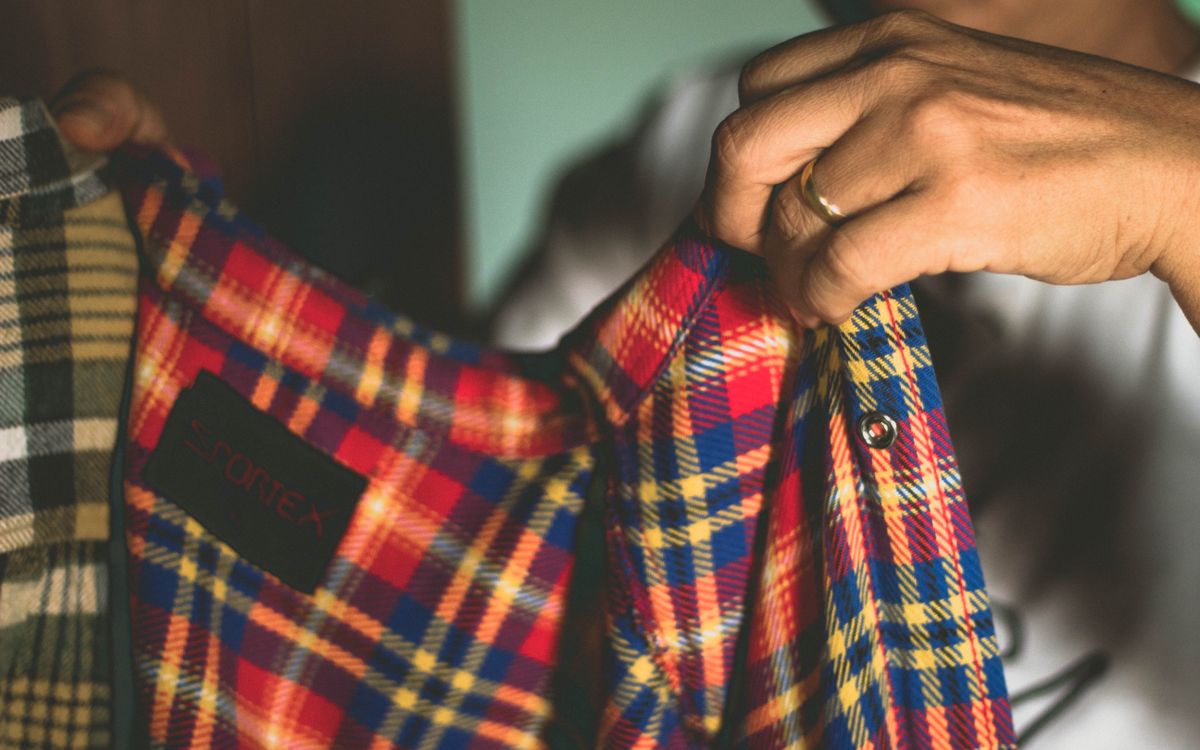
Flannel is not a fiber and not a pattern — it is a fabric construction: a twill weave that has been passed through a napping stage, where rollers covered in fine wire teeth brush the surface and pull fiber ends up into a soft halo called the nap. The twill base gives the cloth body and a slight diagonal grain; the nap gives it the brushed, insulating feel that separates flannel from every other cotton shirting. The checkered pattern most people picture is a yarn-dyed twill print of squares and overlapped lines, but the pattern is incidental — solid-color flannel is the same cloth underneath.
The name carries baggage. Traditional flannel was wool; modern shirt flannel is almost always cotton, sometimes with a small polyester share for wrinkle resistance. The full terminology, including the cotton variant sold as flannelette, is sorted out in the flannel weight and napping guide. On a modern label, the useful information is never the word “flannel” itself — it is the weight, the fiber percentages, and the finish.
Weight: the number that predicts warmth
Flannel shirting spans a wider weight range than most buyers expect, and the range maps cleanly onto how the shirt is meant to be worn:
| Weight class | GSM | oz/yd² | How it wears |
|---|---|---|---|
| Light | 130-160 | 4-4.7 | Summer-weight or indoor layering; drapes, wrinkles like a normal shirt |
| Midweight | 160-220 | 4.7-6.5 | The standard shirt band; warm enough for cool weather, not stifling indoors |
| Heavy | 220-280 | 6.5-8.3 | Winter shirt-jacket territory; stiff at first, substantial after breaking in |
| Very heavy | 280+ | 8.3+ | Outer-layer cloth; behaves more like a liningless jacket |
The weight lines up with the broader gsm map across fabric types: flannel sits in the same midweight band as sweatshirting, and the heaviest shirt flannels overlap with light jacket cloth. A useful field check without a scale: hold the fabric up to light. A genuine heavy flannel blocks most of it; a summer-weight one glows through the nap.
Single nap versus double nap
Napping can be done to one face of the cloth or both, and the choice is the biggest invisible quality fork in the category. Single-napped flannel is brushed on the inside only — soft against skin, but the outside keeps a smoother, slightly shinier face that shows wear and pilling sooner. Double-napped flannel (often written “double-brushed” or sold as “double-face”) is brushed on both sides, which softens the outside, thickens the hand, and hides the twill diagonal under fuzz on both faces.
| Construction | Inside | Outside | Typical weight band | Trade-off |
|---|---|---|---|---|
| Single-napped | Brushed, soft | Smooth twill face | 140-200 gsm | Crisper look; surface ages visibly |
| Double-napped | Brushed | Brushed | 180-280 gsm | Softest hand; slightly less crisp, warmer |
Double napping costs the mill more — another pass through the napper, more fiber raised, slightly more weight per meter — so it clusters in the heavier, better shirting. It also has a practical consequence: two napped faces hold more air, so double-brushed cloth at the same stated gsm feels warmer than single-napped cloth. If a product page does not say, the quickest physical test in person is to run a fingertip across the outside of the fabric — smooth means single-napped.
The fiber line and how the surface ages
Cotton quality decides how a flannel looks after a season, and the label’s fiber line is where it shows. Short-staple cotton yarns leave more loose fiber ends, which the napping raises — that is why cheap flannel pills fast and collects lint on its own surface. Long-staple cottons (pima, supima, Egyptian types) spin into smoother yarns whose raised nap stays finer and sheds far less. Blends with polyester resist wrinkling and dry faster but feel less breathable and hold odor through long wears.
Three fiber-content scenarios worth telling apart:
- 100% cotton, unstated staple — the default; judge by weight and price tier, and expect ordinary pilling behavior.
- Long-staple cotton stated by name — a real quality signal; the nap stays fine and the cloth softens rather than frays with age.
- Cotton-polyester blends — function first: faster drying, less shrinkage, but a clammy feel in warm rooms and more odor retention.
Shrinkage: the failure mode to plan for
Flannel shrinks more than plain-woven cotton shirting for a structural reason: napping loosens the fiber surface, and the first proper wash lets that surface contract. Finishing is the other variable. Fabric that was preshrunk at the mill (sanforized, or labeled “garment washed”) moves little in home laundering; fabric sold raw or “unwashed” can pull in noticeably, which is why some makers size their flannel with an allowance. The stated finish is one of the lines a careful buyer checks before buying, exactly the kind of disclosure discussed in the fabric label guide.
The laundering rule is simple: cold water, gentle cycle, and either flat drying or a low dryer setting. Hot drying is what turns a one-inch loss into a lost size, because heat plus the loosened nap contracts the cloth aggressively. A flannel shirt that dries slightly stiff softens again within an hour of wear; one that has shrunk does not recover.
Fit and layering: plan for the bulk
Flannel wears bulkier than its weight suggests, because the nap adds effective thickness on both the body and any layer beneath it. A midweight double-napped shirt over a t-shirt needs more room through the chest and shoulder than a poplin shirt of the same stated size. Buyers who layer flannel under sweaters or over tees all winter should check the size chart against chest measurements rather than assuming their woven-shirt size carries over.
Sleeve and hem behavior matter too. Napped cloth grips whatever it touches, so sleeves ride less than smooth cotton ones, and a slightly longer hem sits better over a base layer. Heavyweight flannel stiffens in cold weather and softens with body heat — a natural property of the cloth, and the reason a heavy flannel always feels best after the first half hour of wear.
A four-line buying check
Everything that matters about a flannel shirt is readable from four lines on the page or the tag, before any opinion about pattern enters:
| Check | What good looks like | What it predicts |
|---|---|---|
| Fabric weight | A stated gsm or oz figure | Warmth, stiffness, drying speed |
| Napping | “Double-brushed” or “double-face” stated | Softness inside and out, warmth at equal weight |
| Fiber content | 100% long-staple cotton, or an honest blend | How the surface ages, pilling, odor behavior |
| Finish | “Garment washed” / “preshrunk” stated | How much the first wash will move it |
A listing that states all four is rare and worth a premium; one that states none is asking the buyer to guess. Where a listing is silent, the weight check above and the fiber line on the sewn-in label answer the two most expensive questions — how warm it is, and how it will look after ten washes. The pattern, meanwhile, is purely taste: the checks and plaids that dominate the category are dyed into the yarn before weaving, so they fade with the cloth rather than on it.
Frequently asked questions
- Is heavier flannel better?
- Heavier flannel is warmer, softer after breaking in, and more resistant to wind, but it is also slower to dry and warmer than most indoor settings want. Roughly 150-180 gsm suits year-round indoor wear, 180-240 gsm covers autumn through winter, and anything above 250 gsm behaves like a light jacket layer. The right weight depends on whether the shirt is worn against the body or over other layers.
- Why does flannel shrink so much?
- Flannel is a cotton twill raised into a nap, and the napping process adds a loosened fiber surface that contracts when first washed and dried with heat. Unsanforized or garment-rinsed fabrics can lose several percent of their dimensions on the first wash. Washing cold and drying flat or low removes most of the risk, and a shrinkage allowance in the size chart is common for raw or unprocessed cloth.
- What is the difference between flannel and flannelette?
- Flannel traditionally refers to wool-based napped cloth in a twill weave, while flannelette is the cotton version, lighter and more loosely woven. In modern retail the words are used interchangeably for cotton shirting, so the fabric weight and fiber content lines on the label matter more than the name printed on it.