Sea Island, Pima, and upland cotton compared: what staple length buys you
Cotton labels carry more inherited prestige than hard data. Words like Pima, Egyptian, and Sea Island arrive attached to garments with no numbers next to them, yet underneath all three names lies one measurable property — the length of the fiber itself — and that property explains most of what the premium is actually buying. This guide separates the names from the fiber, shows what staple length changes in the finished cloth, and compares three currently sold t-shirts that sit at three different points on the staple ladder.
Short answer
Cotton grades by staple length: ordinary upland cotton, which dominates the world crop, runs roughly 25 to 29 millimeters of fiber; extra-long-staple cotton — Pima, Supima, Egyptian Giza — runs roughly 34 to 38 millimeters; and Sea Island cotton, the rarest West Indian tradition, exceeds both. Longer staple means fewer fiber ends per centimetre of yarn, which translates directly into smoother hand, higher strength, more sheen, less fuzz, and slower pilling. The three-tier difference is real and tactile, not marketing; the naming on labels, however, is loose, and only trademarked programs like Supima carry verification behind the word.
What staple length actually measures
A cotton fiber — the trade calls each one a staple — is a single seed hair, and its length is set by the plant’s genetics before any harvesting, ginning, or spinning touches it. Length matters at the spinning stage: longer fibers can be drawn and twisted into yarn with fewer ends protruding from the surface, and each protruding end is a potential point of fuzz, pilling, or breakage. Two yarns of identical thickness and twist differ enormously in surface character depending on the fiber inside them, the way a rope twisted from long silk strands differs from one twisted from short sisal snippets. Cotton’s length range is narrow in absolute terms — from roughly 25 millimeters to 50 at the extreme — but the effect at each step is disproportionate, which is why the mill trade grades cotton primarily by length classes: short, medium, long, and extra-long staple.
The four names, and what each covers
The trade sorts those classes into four names a shopper will actually meet, and the table below sets them in one frame:
| Cotton type | Species / tradition | Typical staple length | Share of world crop |
|---|---|---|---|
| Upland | Gossypium hirsutum | Roughly 25 - 29 mm | Over 90% |
| Pima / Supima | Gossypium barbadense, US-grown | Roughly 34 - 38 mm | Under 1% |
| Egyptian (Giza grades) | Gossypium barbadense, Nile-grown | Roughly 34 - 40 mm by grade | Small, graded |
| Sea Island | Gossypium barbadense, West Indies | Roughly 38 - 50 mm | Minute |
The share column is the honest context: when a garment advertises extra-long-staple fiber, it is claiming raw material that the planet produces in tiny quantities relative to the cotton most clothing is made from.
What extra length buys in the cloth
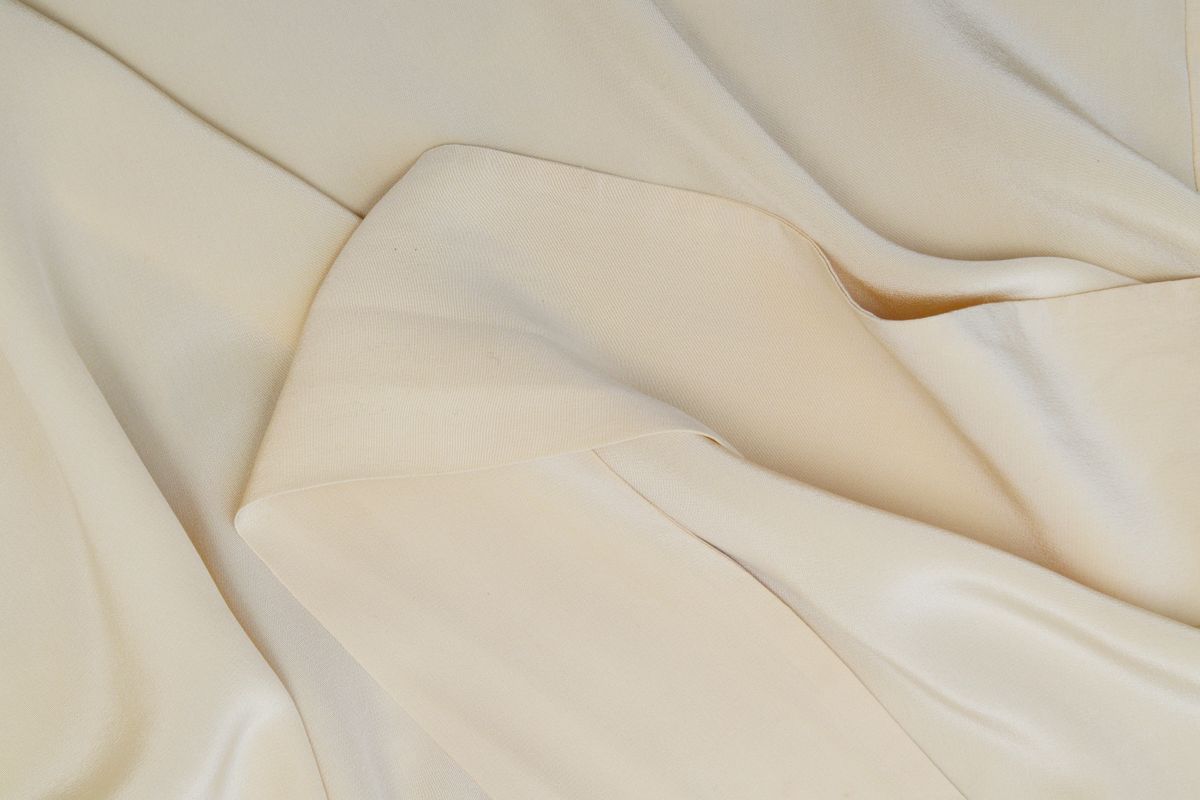
Staple length pays out in four currencies, all traceable to the same mechanism — fewer fiber ends in the yarn. Hand: the surface has fewer tips to feel, so the cloth reads smoother and softer against skin, and it softens further with washing rather than roughening. Strength: longer fibers overlap one another along the yarn more extensively, so the yarn holds together with less twist, and the cloth can be spun finer at equal strength — which is how ELS cotton makes gauze-thin shirting that still survives wear. Pilling: pills begin when loose fiber ends catch and tangle, and fewer ends means a dramatically slower start — the same mechanism that governs pilling in any knit. Sheen: a smooth yarn surface reflects light evenly instead of scattering it off fuzz, which is why quality ELS shirting has that quiet luster no finish can fake onto upland cloth. None of this is subtle; side by side, an upland tee and an ELS tee of the same construction are distinguishable in ten seconds of handling.
The naming problem: Supima, Egyptian, and loose labels
The fiber names do unequal amounts of work. “Supima” is a registered trademark of the Supima Association, licensed to approved growers and mills, with American-grown Pima-species cotton behind it — the word carries a verification chain, which is why it is the one cotton name a buyer can act on directly. “Pima” alone names the species and US origin but can be used with far looser documentation. “Egyptian cotton” names where Giza-grade barbadense cotton is grown, but on retail labels the phrase has historically been applied loosely, and independent testing programs have repeatedly found mass-market “Egyptian cotton” bedding blended with or replaced by upland fiber. “Sea Island” is the extreme case: so rare that most garments using the phrase rely on the shopper not asking for provenance. The general skill — treating a label’s fiber claims with calibrated skepticism and reading what is actually stated — is the core of the fabric label guide, and it matters more per dollar in cotton than in any other fiber, because the spread between upland and true ELS raw material is priced into the garment before the brand adds anything on top.
Three current tees, compared
Staple length is easiest to see across garments of the same type, so the comparison below uses three widely available crew-neck t-shirts that sit deliberately at three points on the ladder: a verified Supima piece, a premium Pima piece, and a mainstream 100% upland cotton baseline.
Uniqlo 100% Supima Cotton Crew Neck T-Shirt
Polo Ralph Lauren Luxury Pima Cotton Crew Neck T-Shirt
Hanes Essential-T T-Shirt
The Uniqlo tee is the entry into verified ELS cotton: its product pages state 100% Supima cotton, with fiber length above 35 millimeters and under one percent of world cotton production noted on the brand’s own material page — one of the few places any apparel brand states staple figures at all. The Ralph Lauren Luxury Pima sits a tier up in hand and price, made from 100% pima cotton in a thin, soft jersey sold through premium retailers. The Hanes Essential-T is the upland baseline: 100% preshrunk cotton with a stated 5.2 oz per square yard fabric weight, the figure blank-tee retailers publish with the listing, and a surface character that shows exactly what the shorter staple trades away.
| Specification | Uniqlo 100% Supima Cotton Crew Neck T-Shirt | Polo Ralph Lauren Luxury Pima Cotton Crew Neck T-Shirt | Hanes Essential-T T-Shirt |
|---|---|---|---|
| Staple class | Extra-long staple, Supima certified (stated above 35 mm) | Extra-long staple, Pima | Medium staple, upland |
| Fiber content | 100% Supima cotton (stated) | 100% pima cotton (stated) | 100% cotton, preshrunk (stated) |
| Stated fabric weight | Not stated | Not stated | 5.2 oz/yd² (stated) |
| Jersey character | Smooth, low fuzz, subtle sheen | Thin, soft, even-smooth face | Mid-weight, slightly fuzzier surface |
| Construction notes | Crew neck, narrow ribbed collar | Slim fit, embroidered logo | Double-needle stitching, shoulder taping |
What the comparison shows
Reading the three across the table clarifies what each tier of staple buys and what it does not. The Hanes tee states its weight — 5.2 oz per square yard, about 176 gsm, squarely in the mid-weight tee band — while the two ELS shirts state fiber but not weight, a trade-off that says something about what each segment competes on: the upland baseline competes on construction transparency, the ELS garments on raw material. On the body, the difference between the Supima and Pima shirts and the upland baseline is a surface question more than a weight one: the ELS cloth feels smoother and cooler at first contact, pills later in life at collar and underarm, and holds its color depth better because light is not scattering off surface fuzz. Between Supima and Pima, the practical gap narrows to verification and finishing — both are barbadense fiber, and the Supima license is the piece of paper the plain Pima label lacks. What no tier escapes is cotton’s shared behavior: all three shrink under heat, all three abrade eventually, and all three are, structurally, the same fiber at different lengths.
Checking a listing before paying the premium
The premium over upland cotton is real, so it is worth verifying that a listing actually contains ELS fiber. Four checks, in descending order of strength. A Supima trademark on the label is the strongest signal, since it implies licensed supply. A stated staple figure — as Uniqlo publishes for its Supima line — is second, and rare enough that its presence usually signals a mill that cares. A species name (pima, Giza) without certification is third: plausibly true, unverifiable from the page. Vague phrases like “premium cotton” or “long-staple feel” are not signals at all. The routine of cross-checking what a product page states against what it omits — weight, fiber verification, construction — is the same one laid out in the pre-purchase spec checklist, and cotton is the category where it repays the minute it takes. One final calibration: ELS fiber improves surface character and longevity, but it does not change care physics, and a 22 USD-equivalent Supima tee washed hot still shrinks like any cotton.
Where Sea Island sits, and why it stays niche
Sea Island cotton deserves its own paragraph because it is the name most often borrowed and least often delivered. The real fiber is barbadense cotton from the West Indies tradition, historically grown on Sea Islands and Caribbean islands, with staple lengths at the very top of the cotton range and a fineness that lets mills spin extraordinarily fine, lustrous yarn. Its economics keep it niche: production is a minute fraction of the world crop, much of the handling remains careful and semi-manual to protect fiber length, and the cloth sells at prices that confine it to shirting from a handful of European mills. A garment labeled Sea Island at a mainstream price is almost certainly using the word decoratively — the verified versions trace to named growers, and the unverifiable versions should be read as “ELS-styled marketing” until the listing proves otherwise. For most wardrobes, verified Supima captures the practical benefit at a fraction of the outlay, and that is the level at which the staple-length premium is honestly worth paying.
The picks
Some links below are affiliate links — we may earn a commission at no extra cost to you.
Uniqlo 100% Supima Cotton Crew Neck T-Shirt
Verified Supima extra-long-staple cotton with the staple length stated above 35 mm — the clearest documented entry into real ELS fiber at a mainstream price.
Hanes Essential-T T-Shirt
The upland cotton baseline with a stated 5.2 oz/yd² fabric weight — useful precisely because it shows what medium staple trades away in surface smoothness and pilling resistance.
Polo Ralph Lauren Luxury Pima Cotton Crew Neck T-Shirt
100% pima cotton in a thin, soft premium jersey — the ELS hand at a step up in cloth refinement, trading away the Supima verification layer for finishing.
Comparison
| Specification | Uniqlo 100% Supima Cotton Crew Neck T-Shirt | Polo Ralph Lauren Luxury Pima Cotton Crew Neck T-Shirt | Hanes Essential-T T-Shirt |
|---|---|---|---|
| Staple class | Extra-long staple, Supima certified (stated above 35 mm) | Extra-long staple, Pima | Medium staple, upland |
| Fiber content | 100% Supima cotton (stated) | 100% pima cotton (stated) | 100% cotton, preshrunk (stated) |
| Stated fabric weight | Not stated | Not stated | 5.2 oz/yd² (stated) |
| Jersey character | Smooth, low fuzz, subtle sheen | Thin, soft, even-smooth face | Mid-weight, slightly fuzzier surface |
| Construction notes | Crew neck, narrow ribbed collar | Slim fit, embroidered logo | Double-needle stitching, shoulder taping |
Specifications as stated on the products' own retail listings, checked November 2026.
Sources
- Uniqlo product page for the 100% Supima Cotton Crew Neck T-Shirt, stating 100% Supima cotton, and Uniqlo's Supima material page stating fiber length above 35 mm and under 1% of world cotton production (uniqlo.com), checked November 2026
- CareOfCarl product listing for the Polo Ralph Lauren Luxury Pima Cotton Crew Neck T-Shirt, stating 100% pima cotton and slim fit (careofcarl.com), checked November 2026
- Hanes Essential-T (style 5280) retail and blank-tee listings, stating 100% preshrunk cotton and 5.2 oz/yd² fabric weight (Amazon and blank apparel retailers), checked November 2026
Frequently asked questions
- Is Supima the same as Pima cotton?
- Supima is the trademarked licensing name for Pima-species cotton grown in the United States and certified through the Supima Association. Pima is the species name for American-grown extra-long-staple cotton; Supima adds a verification layer on top of it. A Supima-labeled garment should be traceable to licensed growers, which plain 'Pima' on a label does not guarantee.
- Why is Sea Island cotton so rare?
- True Sea Island cotton is extra-long-staple cotton of the West Indian tradition, grown in tiny volumes on a few Caribbean islands where the original variety survives. Production is a minute fraction of the world crop, the fiber is handled with minimal machinery to protect its length, and the resulting cloth sells at prices that keep demand niche.
- Does longer staple mean a garment never pills?
- No, but it changes the odds. Pills form when fiber ends work loose from the yarn surface and tangle, and longer fibers hold into the yarn far better, so extra-long-staple cloth fuzzes and pills markedly less than short-staple cloth of the same construction. Under sustained abrasion — a bag strap, a seatbelt — any cotton can pill; the ELS version simply takes much longer to start.