Hemp fabric: why it wears in, not out
Hemp occupies a strange corner of the fabric world: an old, tough, plant-stem fiber that spent decades as workwear and rope, then reappeared in fashion mostly wrapped in sustainability claims. Neither framing tells you what the fabric feels like or how to buy it. This guide covers what hemp actually is as a textile, why its stiffness is a breaking-in problem rather than a permanent one, and where the different weights fit in a wardrobe.
Short answer
Hemp is a bast fiber, like linen, spun into yarns that are strong, absorbent, and initially stiff. New hemp feels canvas-like; it softens with washing rather than wearing out, which is where the phrase “wears in, not out” comes from. It suits midweight and heavy woven garments — shirts, trousers, jackets — where its structure helps, and it behaves much like linen in heat: absorbent, quick-drying, prone to wrinkle.
What hemp fabric is
Hemp cloth comes from the stem of the Cannabis sativa plant, processed the way flax is: the woody core is separated from the long fiber bundles running the length of the stem, and those bundles are spun into yarn. The fiber is a bast fiber in the same family as flax, ramie, and jute, which is why hemp so often gets compared to linen rather than to cotton — the comparison that matters for feel, drape, and wrinkle.
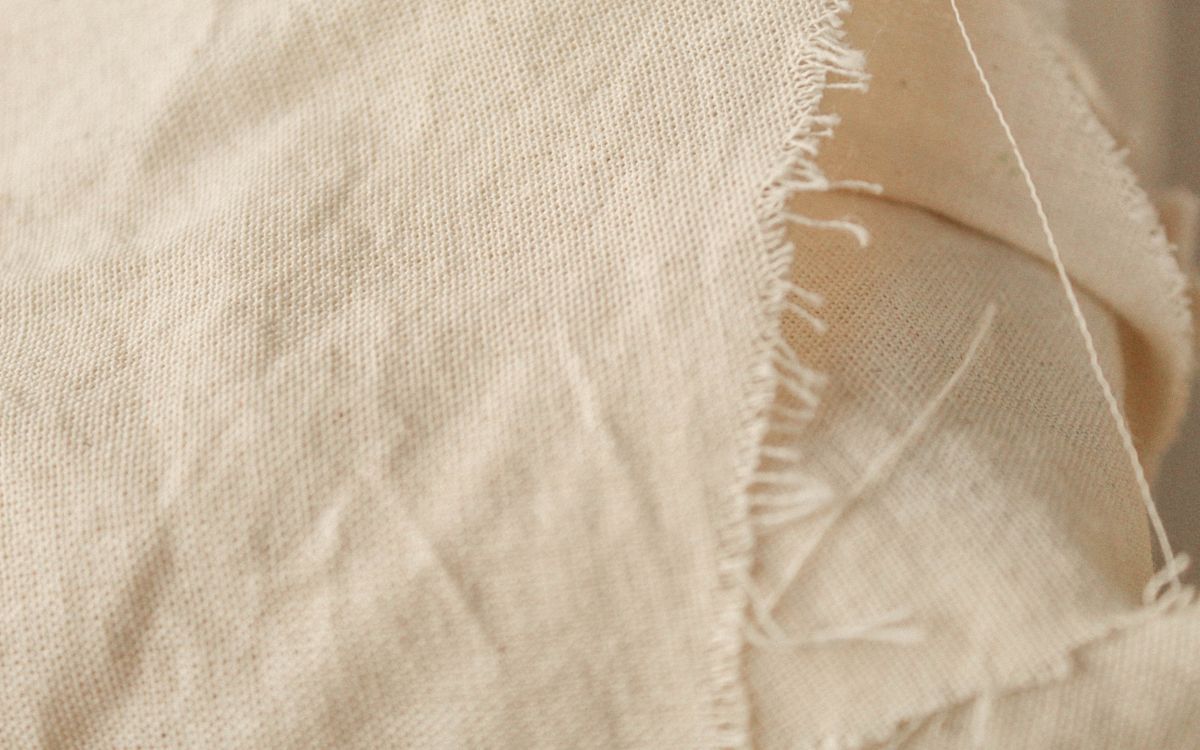
Structurally, hemp fibers are thicker and more rigid than cotton fibers, and they hold up wet as well as dry — one historical reason hemp canvas dominated rope and sailcloth for centuries. In clothing that same rigidity is both the charm and the barrier: the fabric holds a crisp shape and resists stretching out, but a garment straight off the shelf can feel like it was cut from a drop cloth.
Why it starts stiff and softens with washing
The stiffness is fiber geometry, not finishing. Cotton fibers are short, thin, and convoluted, so cotton yarn bends easily; hemp fibers are long bundles with thick cell walls, so the yarn resists bending until the walls are softened by water, agitation, and time. Every machine wash and dry cycle flexes the fibers thousands of times, which is why break-in happens across the first ten or fifteen washes rather than in a week of wear.
Two practical consequences follow. First, the fabric a buyer receives is not the fabric they will own in six months: hemp softens and gains a slight drape, and shrinkage on early washes is real, so buying with the first washes in mind matters. Second, the softening is bounded — a heavy hemp canvas softens toward a broken-in canvas, not toward a cotton voile. The weight you buy is the weight you keep.
| Stage of life | Hand feel | Drape | What changes it |
|---|---|---|---|
| New, unwashed | Crisp, canvas-like, dry | Structured, holds shape | — |
| After several washes | Softer, less board-like | Starts to relax | Wash cycles, tumble drying |
| Broken in | Soft with a dry, textured hand | Fluid at lighter weights, still stable at heavy ones | Continued washing and wear |
Weight classes and what they are used for
Hemp fabric is sold in the same weight bands as other wovens, and the intended garment follows the weight closely. Light hemp-cotton shirting sits well under 150 gsm; shirt-weight hemp wovens run roughly 150-200 gsm; trousers and jackets live in the 250-400 gsm band, overlapping the classic canvas range — the same bands mapped in the gsm weight guide.
| Weight band | Typical fabrics | What it becomes | Character on the body |
|---|---|---|---|
| 120-150 gsm | Hemp-cotton blends, fine wovens | Shirts, summer pieces | Airy but with more body than cotton voile |
| 150-200 gsm | Hemp-linen and pure hemp poplins | Shirting, dresses | Crisp, breathable, wrinkles like linen |
| 250-350 gsm | Hemp twills, mid canvas | Trousers, chore jackets | Sturdy, structured, breaks in well |
| 350-450 gsm+ | Heavy hemp canvas | Outerwear, aprons, bags | Rigid at first; extremely abrasion-tolerant |
The heavy bands are where hemp’s strength matters most, and they overlap directly with the cotton canvas used in workwear — a comparison that plays out garment by garment in the canvas jacket guide. A hemp twill trouser is, in effect, competing with a heavy chino, and the hemp version usually wins on abrasion and loses slightly on initial softness.
Hemp versus linen versus cotton
Because hemp and linen are both bast fibers, their behavior tracks closely: absorbent, quick to dry, cool in heat, and honest about wrinkles. Cotton differs on nearly every axis — softer from day one, less absorbent per gram, more prone to stretch out at stress points. The table below is the practical cheat sheet.
| Property | Hemp | Linen | Cotton |
|---|---|---|---|
| Initial hand | Stiff, dry | Crisp but softer | Soft |
| Break-in | Noticeable, wash-driven | Mild | None |
| Strength (same weight) | Highest of the three | High | Moderate |
| Wrinkle behavior | Wrinkles, holds creases hard | Wrinkles freely | Wrinkles least |
| Moisture behavior | Very absorbent, fast-drying | Very absorbent, fast-drying | Absorbent, slower to dry |
| Where it wins | Trousers, jackets, heavy shirting | Summer shirting, dresses | Everything that must feel soft on day one |
In heat, hemp behaves like linen: the open weave and high absorbency move sweat off skin and dry fast, which places both fibers in the same summer wardrobe slot that the season-by-fabric climate map assigns to light wovens. The visual difference is subtle — hemp has a slightly grainier, more matte surface, linen a more fluid slub.
The blends: hemp-cotton and hemp-Tencel
Pure hemp is the exception, not the rule, in modern clothing. Two blends dominate. Hemp-cotton, most often split somewhere between 45/55 and 60/40, trades away some strength for day-one softness and less aggressive wrinkling; it is the standard shirting blend and a good first hemp garment for anyone unsure about the hand feel. Hemp-Tencel or hemp-viscose blends push the other direction, adding drape and a smoother surface for dresses and flowier shirts — the reasoning behind pairing hemp with regenerated cellulose fibers is laid out in the Tencel-versus-viscose comparison.
Blend percentages are the one label line with legal force, so reading them properly means knowing which fiber’s personality dominates — the same descending-order logic that governs every blend. A “hemp feel” shirt that is 70% cotton behaves mostly like cotton; the hemp contributes texture and a modest strength bump, not a transformation.
Care: washing, shrinkage, and wrinkles
Hemp laundering is linen laundering. Cold or warm machine wash, mild detergent, and line drying preserve color and keep shrinkage gradual; hot tumble drying accelerates both the softening and the size change, which is a legitimate choice for someone who wants the break-in over with. Hemp tolerates hot ironing well, and the deep creases it forms — especially at fold lines in heavy canvas — respond to real heat rather than gentle steam.
Two habits keep hemp garments looking right for years. First, wash hemp canvas items inside out early on, since the surface softens unevenly where it rubs against other laundry. Second, expect the wrinkle: hemp shirting creases like linen does, and the crease-resistant treatments that exist for cotton are uncommon on hemp. Garments sold as “garment washed” have had a first shrink-and-soften cycle at the factory and arrive closer to their final character.
What the sustainability claims actually cover
Hemp’s environmental case is real but narrower than marketing suggests. The agronomy is genuinely favorable: the plant grows fast, needs little irrigation compared with conventional cotton, and typically requires few pesticides. But fabric-level claims run through processing and dyeing like any other textile, and a hemp garment is not automatically a low-impact one. Where a brand wants the claim checked rather than implied, certifications do the work — the division of labor between agricultural and chemical-safety certifications is laid out in the fabric certifications guide. The honest summary: hemp is a low-input crop whose cloth inherits a decent story, and the certification line on the label is what turns a decent story into a checkable one.
Frequently asked questions
- Why is hemp fabric stiff when new?
- Hemp is a bast fiber — the long strands from the plant's stem — and its fibers are naturally thicker and more rigid than cotton. Yarn spun from them holds its shape, so a new hemp garment can feel canvas-like. Every wash cycle relaxes the fiber and breaks in the weave, which is why hemp gets softer and slightly more draped over its first dozen washes.
- Is hemp fabric stronger than cotton?
- Wet and dry, hemp fiber is generally stronger than cotton fiber of the same yarn weight, which is why hemp canvas has a long history in rope, sailcloth, and workwear. In a garment the practical difference is abrasion life: a hemp twill or canvas typically outwears a comparable cotton one, though a loosely knit or thin hemp fabric can still fail like any other thin fabric.
- Does hemp fabric shrink?
- It can, mainly on the first washes, because hemp fibers relax and the fabric contracts the way linen does. Warm machine washing and hot drying pull the most shrinkage out at once. Cold washing and line drying keep it gradual, and pre-washed or hemp-cotton blended fabrics usually arrive closer to their final size.